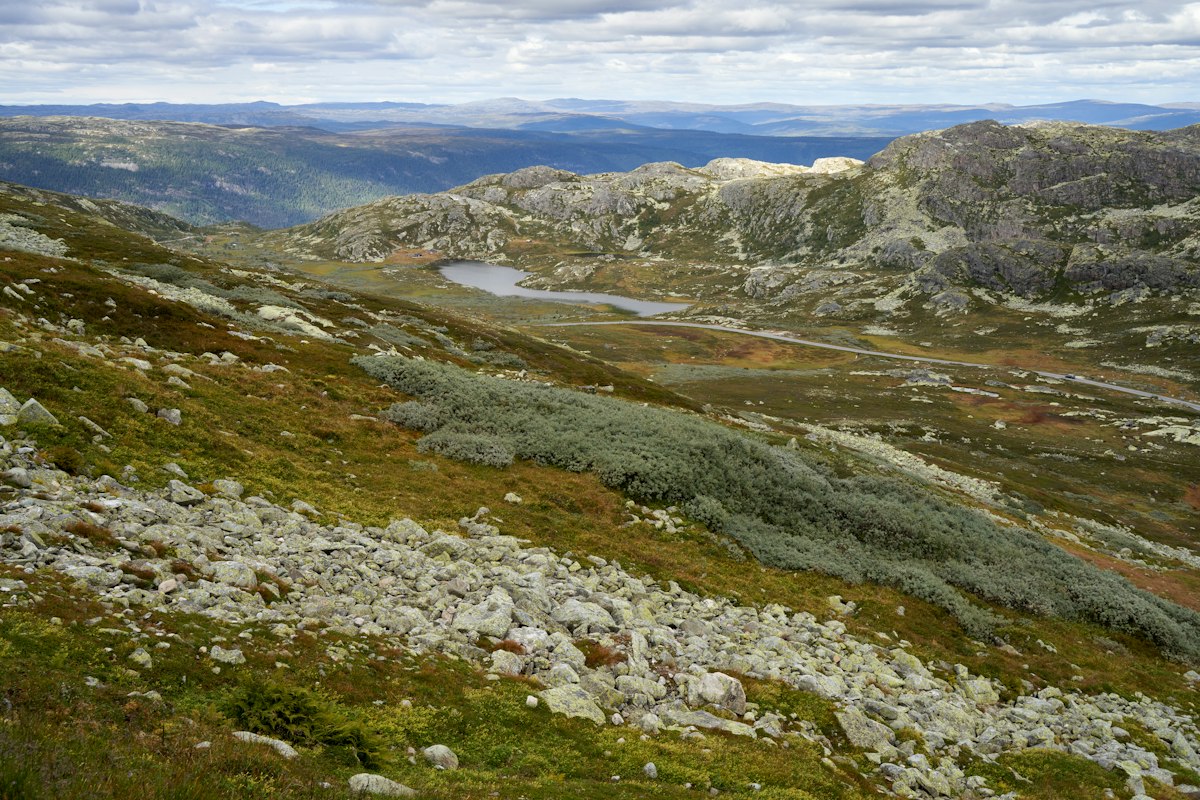
Rjukan lies at the bottom of the narrow Vestfjord valley in southern Norway, flanked by sheer granite slopes and the towering bulk of Mount Gaustatoppen. Because the surrounding ridges rise sharply above the settlement, direct sunlight disappears from the streets in late September and fails to return until mid-March. For nearly six months each winter, the town remains submerged in cold mountain shadow.
A century-old dilemma
In the early twentieth century, industrialist Sam Eyde founded Rjukan to house workforce families for a vast nitrogen fertilizer plant powered by the nearby waterfall. Eyde noticed the persistent fatigue and low spirits that spread among workers during the sunless winter months. In 1913, he proposed placing large mirrors along the upper rim of the gorge to redirect sunlight down to the valley floor.
The mechanical limitations of the period prevented engineers from building an automated tracking system, so the company funded an aerial tramway instead. Completed in 1928, the Krossobanen cable car carried residents out of the shaded valley, allowing families to spend their weekends absorbing direct daylight on the mountain plateau.
Engineering an artificial dawn
Almost a century after Eyde sketched his proposal, local artist Martin Andersen revived the project. Inspired by a smaller mirror installation in the Italian Alps, Andersen campaigned to realize the original vision. Supported by municipal funding and private sponsors, helicopters transported three computer-guided heliostats to the northern cliff face, roughly 450 meters above the municipal square.
Powered by local solar panels and wind generators, the mirrors adjust their tilt every ten seconds to track the low arc of the winter sun as it skims the southern ridge. Computer sensors calculate the sun’s coordinates and coordinate the hydraulic motors, ensuring the reflected beam remains focused on the market square below.
Life inside the reflected circle
The three mirrors converge to cast an illuminated ellipse covering roughly six hundred square meters of the central plaza. On clear winter mornings, the square fills with amber brightness while surrounding streets remain dark and cold. Residents gather on wooden benches in sub-zero temperatures, donning sunglasses and sharing hot coffee as children play across the bright stones.
Extended winter darkness often brings lethargy and seasonal mood shifts to northern communities. The artificial beam provides a shared gathering place during months that typically keep people indoors. In a town defined by steep terrain, the mountain mirrors have turned the coldest weeks of the year into a collective celebration of light.
Leave a Reply