Author: Rubi

  • The Bookseller Who Crowned Himself King

    The Bookseller Who Crowned Himself King

    Richard Booth carries a heavy box of old books into an empty fire station. The floor is cold stone, and dust hangs in the morning light. Outside, the Welsh town of Hay-on-Wye is silent. The local train stopped running months ago, and young workers left for jobs in big cities. Richard sets the box down on a wooden table. He opens the box and takes out an old novel. He smiles. He wants to fill the whole town with paper.

    1961: An old fire station in Wales

    Richard grew up near Hay-on-Wye, but he went to university in Oxford. When he returned home, he saw empty shops on every corner. People told him the town had no future. Richard had a different idea. He loved used books, and he knew that old libraries in America were throwing away paper books. He bought thousands of volumes and shipped them across the ocean in wooden containers.

    Soon, the old fire station ran out of space. Richard bought the closed cinema and stacked books between the seats. Next, he bought an eight-hundred-year-old stone castle in the center of town. He put tall wooden bookshelves inside the castle rooms. Visitors drove for hours along narrow country roads to search through the stacks. Other people saw his success and opened bookshops of their own.

    1977: The king with a paper crown

    By 1977, Hay-on-Wye had dozens of bookshops, but Richard wanted more attention for his town. On the first day of April, he organized a parade. He put on a robe and placed a paper crown on his head. He declared that Hay-on-Wye was now an independent kingdom of books. He named himself the king, and he appointed his brown horse as the prime minister.

    Reporters from London and New York wrote about the book kingdom. Television cameras filmed the narrow streets. Travelers loved the joke and arrived on buses. The little town with fifteen hundred residents became the first book town in the world. Local hotels and tea shops were full of guests.

    Today: Books on the stone wall

    Richard passed away in 2019, but his town remains full of books. Today, more than twenty bookshops sit along the short streets. Visitors can find books about history and books about cooking. The annual book festival brings thousands of writers to the green hills every summer.

    The most famous spot in town is still Richard’s outdoor honesty shop. Outside the castle wall, long wooden shelves stand under the open sky. Anyone can walk up to the wooden shelves and pick up an old novel. Next to the shelves, a small slot sits cut into the ancient stone wall. A painted wooden sign asks visitors to drop fifty pence into the slot for each book.

    Nobody guards the shelves, and nobody counts the money. In sixty years, the wooden boxes by the wall have never had a lock.
  • The Right Angle and Other Municipal Fantasies

    The Right Angle and Other Municipal Fantasies

    Twenty percent is roughly where human civic obedience collapses. According to pedestrian network analysts, if a paved sidewalk forces someone to walk more than twenty percent farther than a direct diagonal line, almost everyone abandons the concrete. It does not matter how smooth the flagstones are or how recently the municipal ribbon was cut. The moment geometry demands too much patience, the average pedestrian looks at a pristine expanse of Kentucky bluegrass and decides that rules are merely polite suggestions.

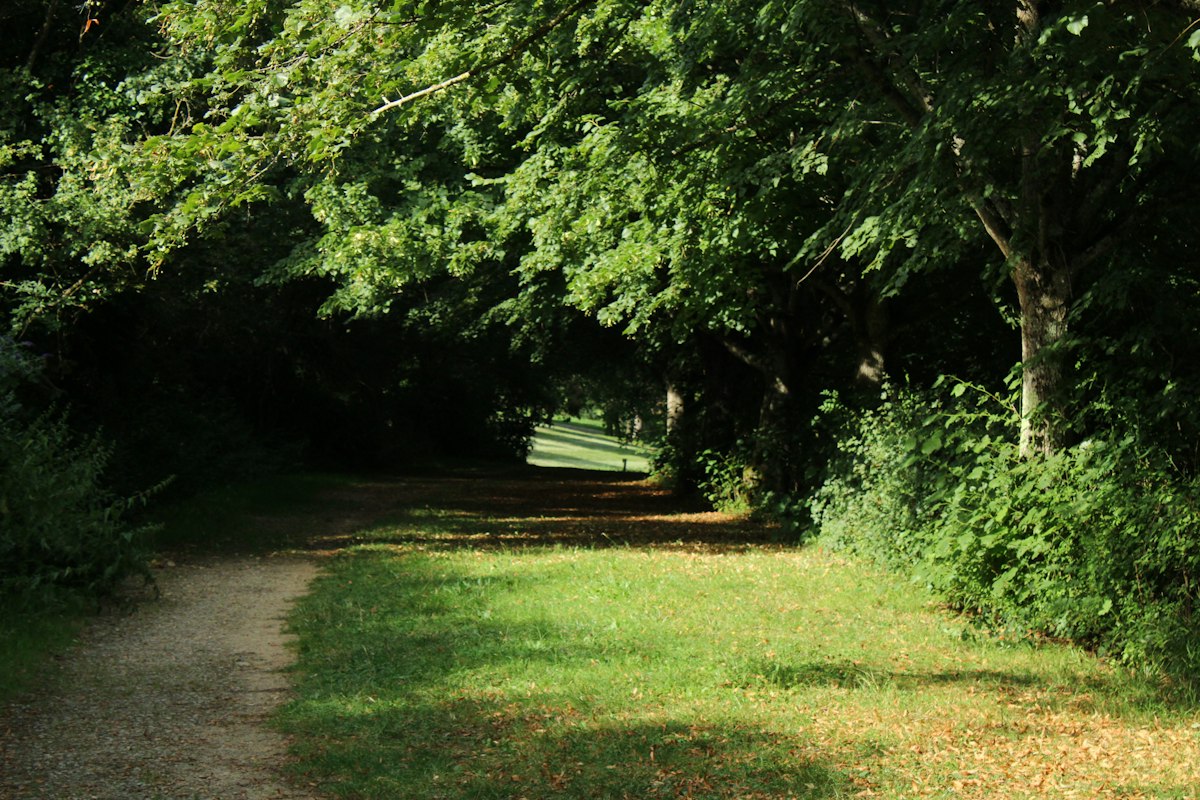
    Urban designers refer to the resulting scars as desire lines, though the Dutch have the better phrase: olifantenpaadjes, or little elephant paths. Every city has them. They slice across university quadrangles and carve dusty trails through manicured parklands. To an engineer seated before a drafting board, a right angle represents order and civic discipline. To someone walking to the tram in damp shoes, that same right angle is simply an unprovoked insult.

    For decades, administrators responded to these rebel tracks with escalating hostility. They erected wire fences and planted thorny shrubs across the shortcuts. None of it worked. Foot traffic simply swung a few inches wider, trampling the perimeter and wearing down an even broader swath of dirt. Pedestrians possess an unspoken collective determination that exhausts municipal patience. If several thousand people agree that a decorative hedge sits between them and lunch, the hedge is doomed.

    Eventually, the smarter planners surrendered. When Michigan State University expanded its grounds, designers deliberately refrained from paving the open spaces between the new halls. They seeded the ground with lawn grass and waited. By the following autumn, thousands of students had carved an irregular web of dirt trails into the sod. Only then did the grounds crew arrive with cement mixers, pouring concrete over the routes the students had chosen. The resulting walkways looked erratic on an architectural blueprint, but nobody stepped on the lawn again.

    Northern Europe took the concession even further. In Helsinki, municipal planners long ago stopped arguing with pedestrians about where a park path ought to run. Every winter, heavy blizzards blanket the capital, erasing every curb and walkway under a clean sheet of white. As commuters trudge across the parks, they forge the most direct routes between tram stops and residential streets. Planners document these footprint trails from above during the coldest weeks of January. When spring arrives and the ground thaws, municipal crews simply pour asphalt directly over the tracks left in the snow.

  • Buttons That Answer to Nobody

    Buttons That Answer to Nobody

    “Push it again,” said the man waiting beside me at the corner of Fifth Avenue, stabbing his thumb into the metal disk.

    Pedestrians across the world hit crossing buttons with tremendous energy, convinced that their touch instructs the street signal to stop fifty vehicles immediately. In truth, city transport departments disconnected most of these buttons decades ago when computer timers took over urban traffic grids. In New York City, transport officials confirmed that out of more than three thousand pedestrian buttons, fewer than one hundred send an electrical signal to the lights. The remaining disks stay bolted to street poles for an entirely social reason, because they give impatient walkers something harmless to do.

    Engineers describe these devices as placebo buttons. They deliver the pleasant sensation of control without altering the machinery behind the scenes.

    • Pedestrian crosswalks: In crowded cities like London and New York, central computers adjust traffic signals according to overall road congestion. Pressing the circular button on the pole will not hurry the green signal during peak hours, because interrupting the programmed flow would create gridlock across several avenues. Transport authorities keep the old buttons in place because removing them would cost millions of dollars, while leaving them alone provides comfort to people waiting in the rain.
    • Elevator doors: When an elevator door opens on the ground floor, hurried passengers often hammer the door close button while watching colleagues approach down the hallway. In the United States, building accessibility codes require elevator doors to stay open long enough for anyone with walking difficulties to enter safely. The door close button responds only when a firefighter inserts an official service key into the panel. For everyday riders, the doors slide shut only after the preset timer expires.
    • Office thermostats: Office employees frequently complain that their shared workspaces feel uncomfortably warm or chilly. Facility managers often solve this dispute by mounting plastic wall thermostats that make a distinct clicking noise without linking to the heating pipes. Workplace studies revealed that when staff members believed they could adjust the room temperature by two degrees, formal heating complaints dropped by seventy five percent. People felt satisfied simply because they had turned a physical dial.
    • Flight status screens: Airport monitors and package delivery pages frequently feature circular refresh icons that spin cheerfully when clicked. Most of these digital buttons do not query the central airline database, because thousands of simultaneous requests would slow down the booking servers. The page merely plays a brief spinning animation to acknowledge your tap, while the flight details update according to their regular schedule.

    Psychologists note that people tolerate waiting much better when their hands have a simple task to complete. We understand that the traffic signal follows its own mechanical schedule, yet our thumb reaches for the metal disk every time we step off the curb.

  • Friday Morning on the Bicycle Bus

    Friday Morning on the Bicycle Bus

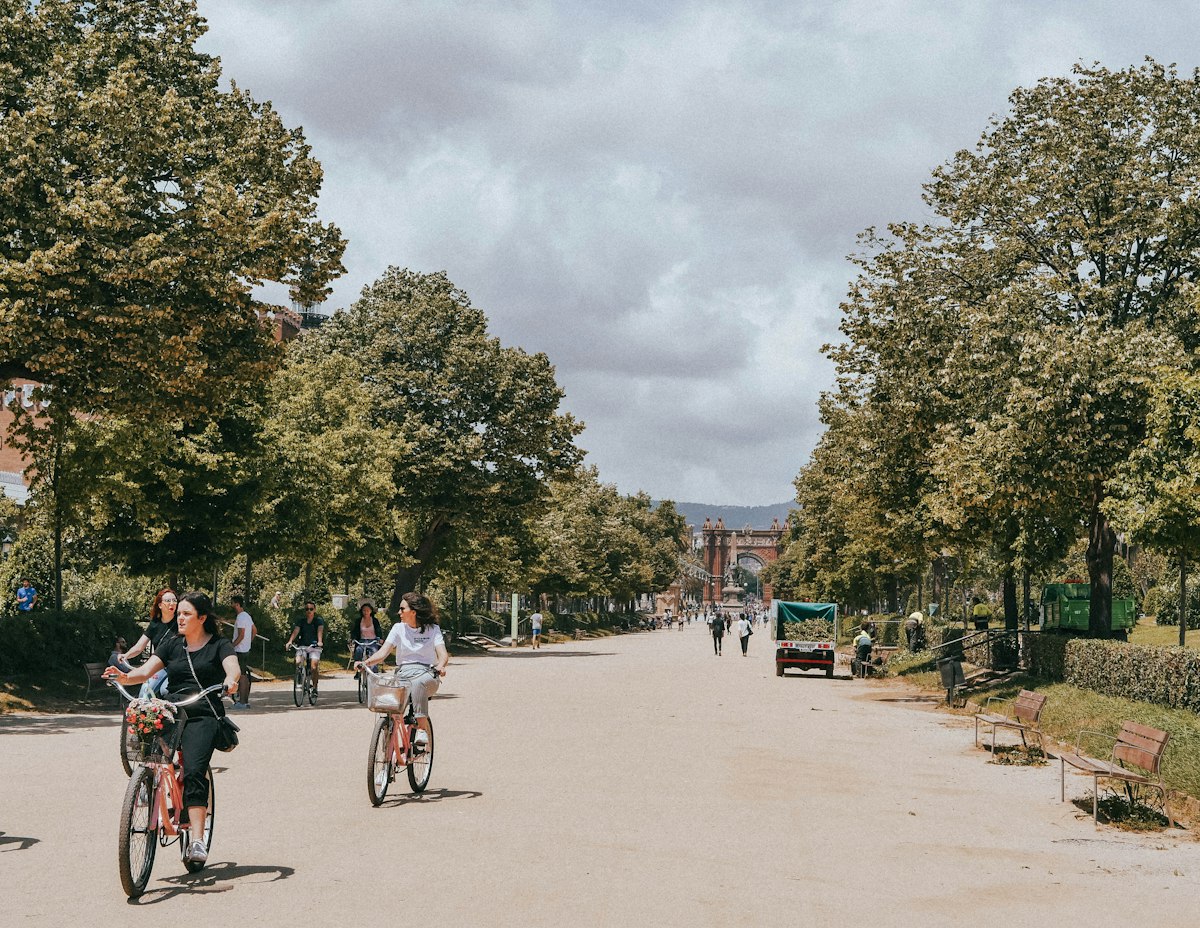
    Bells. Every Friday morning, hundreds of bicycle bells ring together in the center of Barcelona.

    Mireia is eight years old. She presses the silver bell on her handlebars and smiles at her father.

    Her father, Jordi, pumps fresh air into their bicycle tires on the sidewalk. They put on their helmets and roll their bikes toward Carrer d’Entenca, a wide avenue with three busy traffic lanes.

    On normal mornings, this avenue is loud and full of exhaust fumes. Delivery trucks and motorbikes speed past the crosswalks. Because the heavy traffic feels dangerous, most parents keep their children off the road.

    In early 2021, five families decided to try a new idea. They agreed to meet at a street corner and ride their bikes to school together. They called their group the bicibus, or bicycle bus.

    The weekly ride grew very fast. Word spread among neighborhood schools, and soon dozens of parents joined the group. On sunny mornings, more than three hundred riders fill the street together.

    Local police officers help make the route safe. Two officers on motorcycles ride ahead of the crowd and hold back cars at major intersections. For thirty minutes, children own the wide asphalt lanes.

    Older children pedal bicycles with gears, while younger kids ride smaller bikes with colorful baskets. Parents ride on the outer edge of the group to form a moving wall between the children and the empty car lanes.

    Near the front of the parade, a father pedals a long cargo bike with a loudspeaker strapped to the frame. The speaker plays cheerful pop songs, and children sing along while neighbors lean over their balconies to wave.

    News of the Friday ride spread beyond Spain. Teachers in Scotland and the United States saw videos of the happy cyclists and organized similar morning bike buses in their own cities.

    Back on the Barcelona avenue, Mireia pedals between two friends from her third grade class. Her blue backpack rests safely in the front basket, bouncing to the music.

    At half past eight, the crowd turns the final corner and stops outside the school gates. Jordi drops his kickstand on the pavement, and Mireia runs through the school doors before the first bell rings.

  • Morning Freight Down the Red Rock Trail

    Morning Freight Down the Red Rock Trail

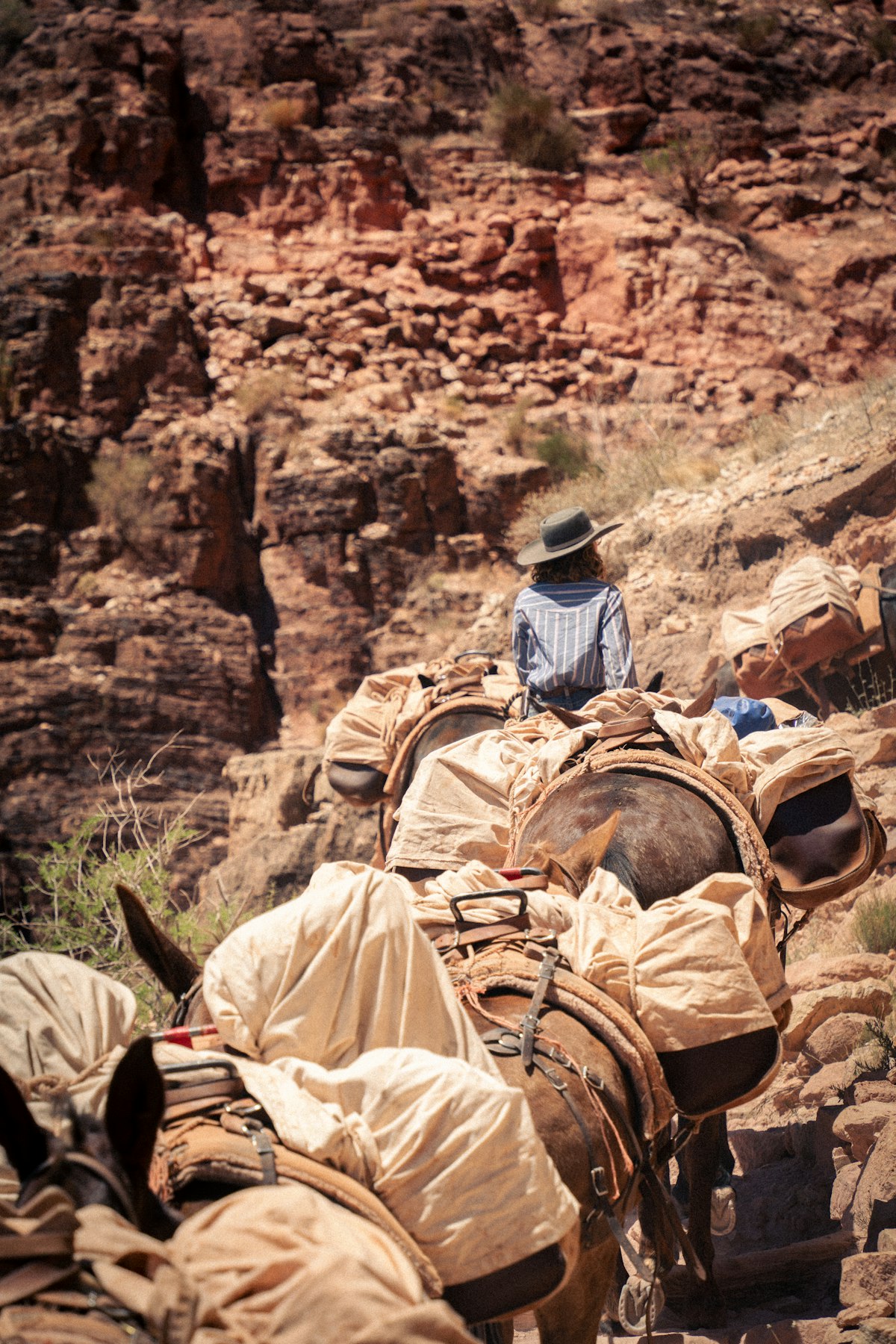
    The United States Postal Service still delivers parcel freight on the backs of mules. Every weekday before sunrise, a contract wrangler meets a postal truck at Hualapai Hilltop, a desolate parking lot perched on the limestone rim of northern Arizona. Below the pavement, the terrain drops two thousand feet into Havasu Canyon, where roughly two hundred members of the Havasupai Tribe live in the village of Supai. Because sheer red sandstone walls cut the settlement off from the national highway grid, daily mail cannot arrive on wheels.

    The work begins in the dark with handheld scales and canvas panniers. Each mule carries roughly one hundred and thirty to two hundred pounds of freight, distributed evenly across both flanks to protect the animal from spinal strain. The cargo looks much like the contents of any suburban mail van: cardboard boxes from online retailers, medicine bottles in padded envelopes, loaves of sliced bread, and cartons of eggs. Local packers strap the loads tight with thick cinch ropes, pulling each knot firm against the canvas. A lopsided pack will shift on the steep grade, so the wrangler circles each animal twice to inspect the balance before releasing the lead rope.

    By six in the morning, the string of fifteen mules starts down the rocky trail. Iron shoes clatter against pale limestone switchbacks, sending loose pebbles tumbling over the ledge into the canyon abyss. The path narrows quickly, winding past sheer crimson cliffs that block the morning sun and keep the canyon floor in deep shadow. Down on the switchbacks, the only sounds are the rhythmic clink of halter chains and the heavy breathing of the animals on the descent. The pack train knows every turn in the stone pathway, stepping deliberately over polished boulders and dry wash beds where winter flash floods have scarred the gravel.

    What happens on the canyon floor

    Three hours and eight miles later, the red canyon walls widen into a grove of green cottonwood trees beside the pale turquoise current of Havasu Creek. Supai appears as a cluster of modest homes beneath the canyon cliffs, centered around a stone post office. When the clatter of hooves echoes against the rock face, residents gather outside the porch to collect their mail. The wrangler loosens the cinch straps and lowers the heavy panniers to the wooden dock. Inside the lobby, postal clerks sort the parcels onto low shelves.

    Before the mules begin their five-hour return climb to the rim, the staff processes the day’s outgoing letters. Every postcard mailed from the counter receives a special purple ink mark showing a mule and its driver beneath the words “Mule Train Mail.” Once the ink dries and the envelopes slip into empty canvas sacks, the wrangler leads the string toward Havasu Creek. The animals drink from the cool water and rest in the shade before the afternoon heat strikes the cliffs above.

  • Reggio Emilia, 1953: A Bank Vault Filled with Milk and Salt

    Reggio Emilia, 1953: A Bank Vault Filled with Milk and Salt

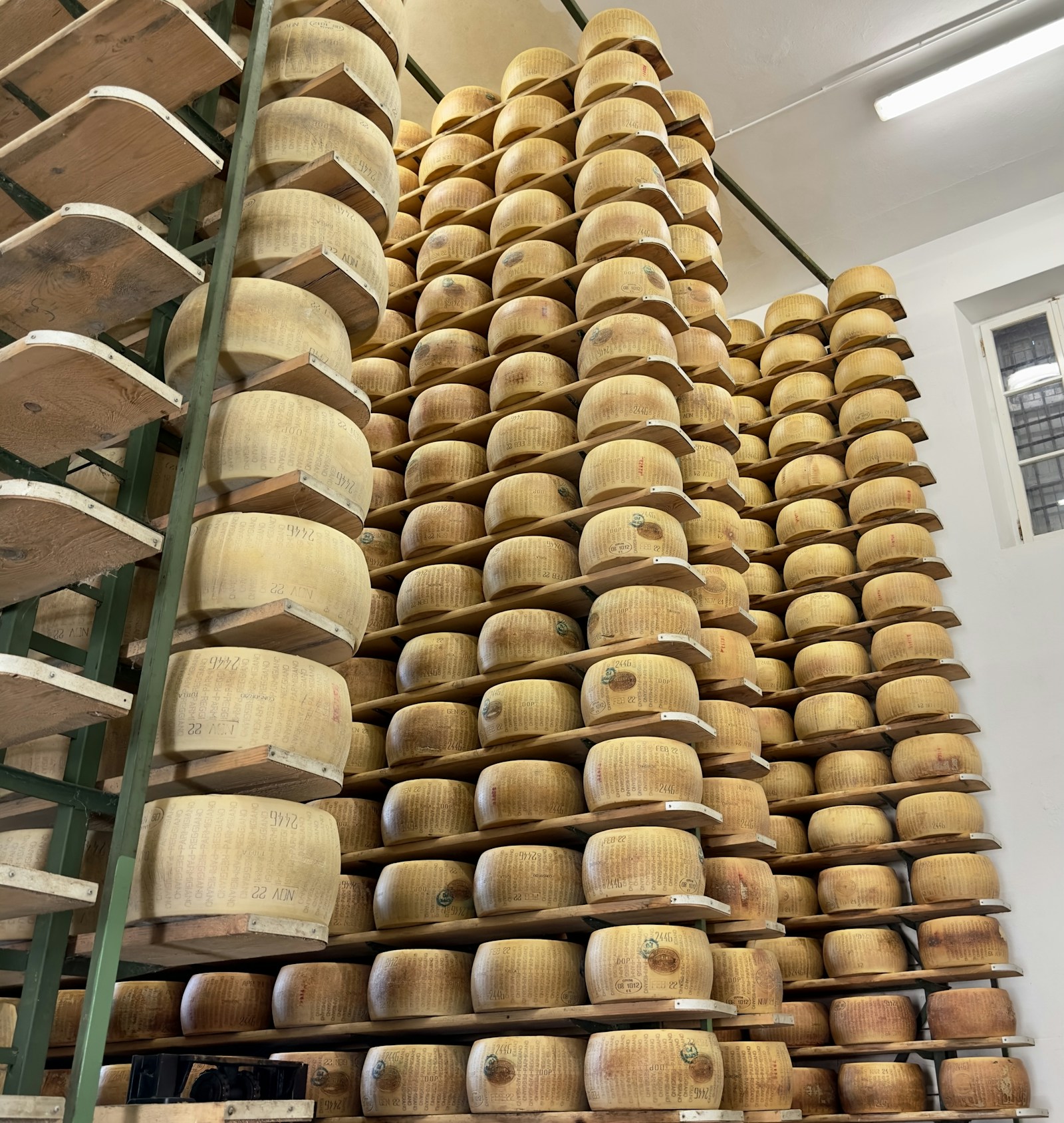
    Inside the brick warehouse at Montecavolo, the air carries a heavy scent of dry pine shelves and aging milk. Long wooden racks rise ten meters toward the ceiling, holding hundreds of pale yellow wheels that rest under steady electric lights. This building belongs to Credito Emiliano, an Italian bank that has stored agricultural wealth since 1953. Gold bars and paper currency fill ordinary bank vaults, but this branch in the province of Reggio Emilia accepts cheese as security for cash loans.

    Two years of waiting in the Po valley

    Making Parmigiano-Reggiano requires patience and strict regional rules that date back several centuries. Back then, dairy farmers around Parma and Reggio Emilia turned daily cow milk into large wheels that needed months to dry. Today, producers must still wait between twelve and thirty-six months before their cheese can reach market shelves. This long aging period creates a serious financial problem for family farms, because cows require daily feed and workers need regular wages while the inventory sits untouched on wooden planks.

    In 1953, the directors of Credito Emiliano created a loan system that addressed this exact delay. A local farmer delivers fresh wheels to the bank warehouse shortly after production, and the bank provides an immediate cash loan worth roughly seventy percent of the estimated final value. The cheese acts as collateral, which means the bank holds the physical goods until the borrower repays the debt. If the producer repays the money after two years, the wheels return to the farm for retail distribution. If the producer defaults on the loan, the bank sells the matured wheels at public auction to recover its funds.

    A small hammer against forty kilograms of milk

    Because the value of the loan depends entirely on food quality, the bank treats storage with extreme care. The warehouse at Montecavolo maintains a constant temperature of eighteen degrees Celsius and eighty-five percent humidity. Specialized machines travel along the aisles to wipe and turn every forty-kilogram wheel twice a month, preventing mold from settling into the rind. Today, the vaults hold more than three hundred thousand wheels, representing over one hundred million euros in agricultural credit.

    At the twelfth month, an inspector from the local cheese consortium visits the warehouse carrying a small silver-plated hammer. The inspector strikes each wheel across its surface and listens to the rebound sound. A clear musical ring proves that the interior texture remains solid and uniform, while a dull thud warns of hidden cracks or air pockets. Wheels that pass the hearing test receive an official oval mark burned directly into the hard rind with a heated bronze iron. Those that fail lose their designation and get sold as secondary table cheese.

    Once the bronze mark is stamped into the crust, the wheel enters the bank ledger as verified security. The cheese rests on its pine plank for another year, growing harder in the still air while the loan on the farmer’s account slowly matures.

  • A New Color in the Deep Pacific

    A New Color in the Deep Pacific

    I always thought the middle of the ocean was deep blue and clean. Far away from land, between California and Hawaii, a giant pile of trash floats in the sea. People call this place the Great Pacific Garbage Patch. Strong water currents pull plastic from many countries into this area. It now covers a space twice the size of Texas. Recently, scientists discovered that all this plastic trash is changing the color of the water.

    Why is the ocean changing color?

    Sunlight hits the sea, and pure water absorbs red light. The clear water scatters blue light back up to the sky. That is why clean ocean water looks bright blue. But plastic trash breaks down over many years. Sun and strong waves turn big bottles and fishing nets into tiny specks. Scientists call these small pieces microplastics.

    These tiny bits of plastic float near the surface. They bounce sunlight in a different way. Between 2002 and 2022, satellites in space watched this quiet part of the Pacific. The photos showed that the water slowly became greener and bluer. Computer tests show that the floating plastic is the main reason for this new shade.

    Can cameras in space help clean the water?

    Finding plastic in a giant ocean is very hard work. Tiny pieces of trash mix with seaweed and small fish. Ships cannot sail everywhere to count every piece of plastic. But satellites fly high above the Earth every day. They can scan thousands of miles of water in seconds.

    If satellites can spot plastic by reading water color, cleanup teams can work much faster. Boats will know the exact places to visit. Researchers in Norway still want to sail into the area to collect water samples. Until those boats arrive, the mystery remains in the waves.

  • Two Hundred Thousand Lunches and Zero Barcodes

    Two Hundred Thousand Lunches and Zero Barcodes

    Every weekday morning across Mumbai, five thousand couriers sort and deliver two hundred thousand hot lunches with an error rate lower than most international airlines. Known throughout India as dabbawalas, this century-old network moves multi-tiered aluminum canisters from suburban home kitchens directly to downtown office desks. They operate without digital barcode scanners or automated routing software. Instead, the entire logistical framework relies on color-coded alphanumeric marks chalked onto each lid, coupled with an unshakeable rhythm dictated by the city commuter rail schedule.

    9:00 a.m. at the residential doorway

    The daily cycle begins in the outer residential suburbs, where couriers on foot or bicycle collect freshly packed containers prepared by family members. Each cylindrical tin, or dabba, holds stacked compartments of warm flatbreads and spiced lentils. Because the average worker leaves home during the chaotic dawn commute, carrying a bulky container on crowded trains remains impractical. The dabbawala arrives later in the morning, collects the warm lunch, and hauls dozens of canisters inside a long wooden tray balanced horizontally across his bicycle handlebars.

    11:30 a.m. on the luggage racks

    At regional railway stations, the couriers congregate on open platforms to consolidate their loads for the journey south. In less than twenty minutes, teams sort thousands of containers according to simple grease-pencil symbols representing destination districts and individual office buildings. The canisters travel inside the luggage compartments of local trains, guarded by couriers dressed in matching white cotton uniforms and traditional Gandhi caps. When the train pulls into terminus stations like Churchgate, another sorting team transfers the trays onto delivery carts within minutes.

    1:00 p.m. at the office desk

    Office workers across Mumbai receive their hot home-cooked meals precisely at midday and eat in communal dining halls. An hour later, they leave the empty tins outside their office doors for collection. By two in the afternoon, the dabbawalas reverse the entire process, returning every empty vessel to the identical suburban kitchen before dusk. In the early 2000s, business researchers examined the operation and calculated that the network makes fewer than one mistake in every six million transactions, matching the statistical benchmark known in manufacturing as Six Sigma.

    When Britain’s Prince Charles requested a formal meeting with the couriers during a state visit in 2003, their leadership set strict conditions. The prince had to arrive between 11:20 and 11:40 in the morning at Churchgate station, because foreign royalty could not disrupt the delivery schedule of ordinary clerks.

  • Train Drivers Who Point at Everything

    Train Drivers Who Point at Everything

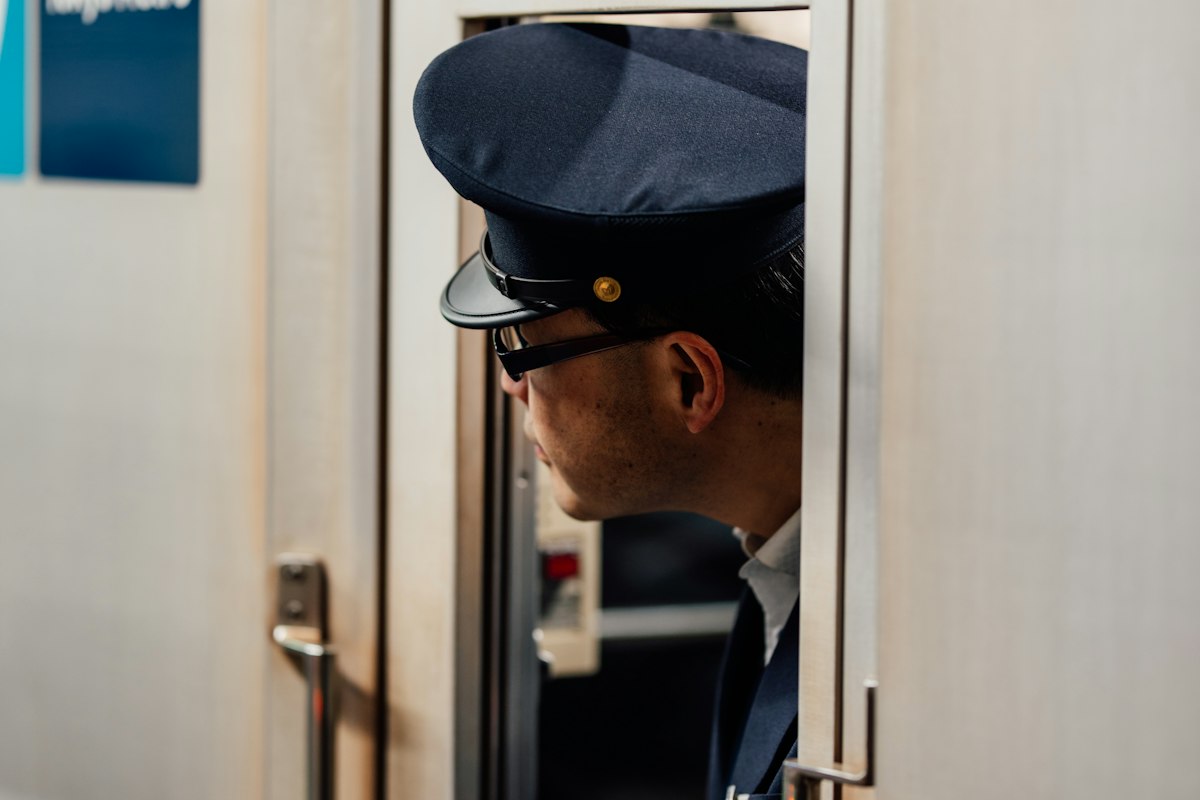
    Every three minutes on the Tokyo subway, an adult in a pressed uniform points dramatically at an empty clock. They do not do this because they are bored, and they are certainly not pretending to be superheroes. Instead, the driver extends a white-gloved finger toward the dial, then announces the exact time to an empty cabin. A moment later, they point at a signal lamp before confirming that the doors are safely shut.

    To a foreign tourist standing on the platform, the entire performance looks theatrical, if not slightly unhinged. You might wonder why a professional train operator needs to talk to the machinery like an anxious parent. Yet this peculiar habit, known in Japan as shisa kanko or pointing and calling, is one of the most effective safety systems ever invented. It was developed in the early twentieth century by steam locomotive engineers who realized that fatigue made people miss basic visual signals.

    The science behind the ritual is surprisingly simple. When you perform a familiar task hundreds of times, your brain slips into automatic mode. You glance at a red light, assume it is green because it was green yesterday, and press the accelerator without thinking. By forcing your physical movement and your voice to work together, pointing and calling pulls the wandering mind back into the present moment. That brief physical gesture creates an intentional pause that interrupts daydreaming.

    Safety researchers discovered that this method reduces human error by nearly eighty-five percent. That single statistic explains why Japan’s passenger rail network can move billions of commuters every year with an enviable safety record. Other countries have tried to copy the idea, though transit workers outside Japan often resist it because they feel self-conscious shouting at inanimate objects on a crowded platform.

    The principle applies just as well to the small embarrassments of daily life. Most of us have turned the car around to verify that the front door was locked, or stared blankly at a kitchen counter wondering where our phone disappeared. Tomorrow morning, before you leave the house, point your finger directly at your keys on the table and announce out loud that they exist. You will look ridiculous to anyone watching, but you will almost certainly remember where you put them.

  • The Desert Town That Lives Underground

    The Desert Town That Lives Underground

    Coober Pedy is a small town in the desert of South Australia. About two thousand people live there. The land around the town is dry and empty. During the summer, the sun makes the ground very hot. Temperatures often rise above 45 degrees Celsius. Because the heat is strong, most residents build their houses underground.

    Homes cut into the rock

    People in the town call these underground homes dugouts. Workers cut rooms directly into the sandstone hills. Inside a dugout, the air stays cool during hot summer days. The thick stone walls also keep the rooms warm in winter. Families do not need electric cooling machines in their bedrooms. The rooms stay around 24 degrees all year.

    Life beneath the ground

    Cars and roads stay on the surface, while daily life happens below. People visit underground shops to buy food and books. Visitors can eat in an underground cafe or stay in a cave hotel. The town also has a bookstore and a post office built inside the stone. When the lights are off, the rooms are dark and quiet. Many residents sleep well because no street noise enters the thick walls.

    The search for colorful stones

    People first moved to this desert in 1915. A young boy found a shiny, colorful stone on the ground. The stone was an opal. Soon, many miners arrived with shovels and tools. They worked in the dirt and built the first underground shelters to escape the dust storms. Today, miners still find opals in the hills around the town.

    Visiting the desert town

    Travelers drive for hours across the desert to visit Coober Pedy. They see white hills of mining dirt and tall metal pipes on the surface. These pipes bring fresh air into the underground homes. Visitors sleep in stone rooms and walk through quiet halls. Local families enjoy their cool rooms and stay protected from the desert sun.