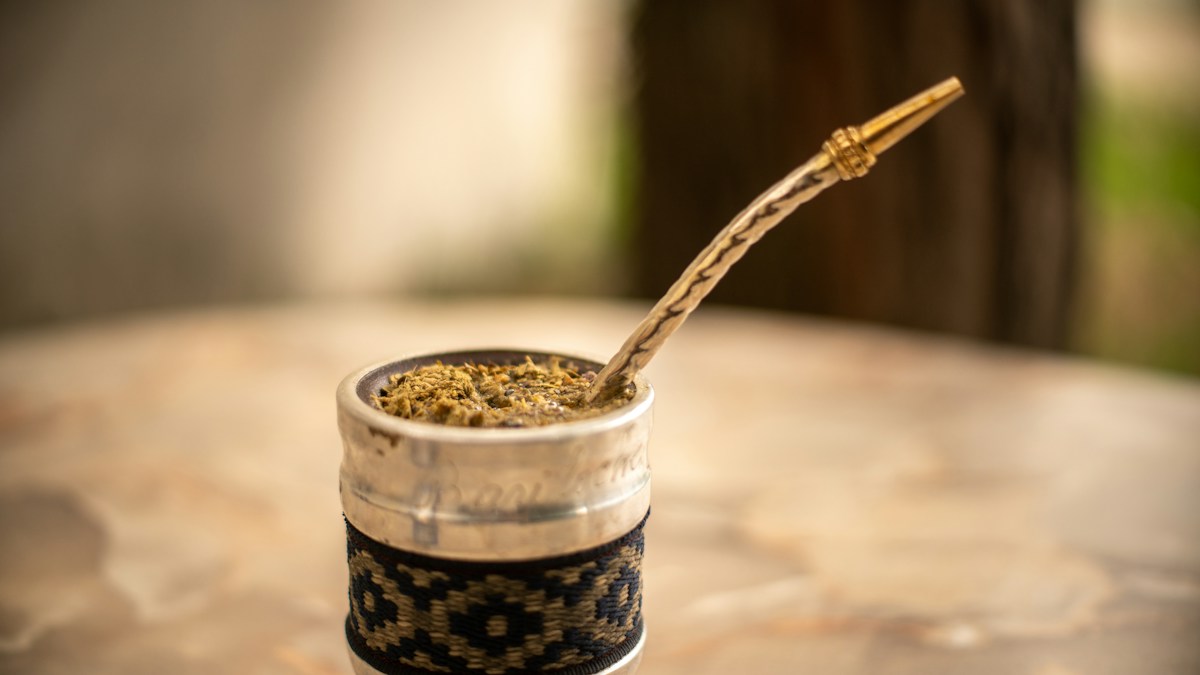
I used to believe that stirring a cup of tea and saying thank you were harmless habits anywhere on earth. In Argentina and Uruguay, those two polite gestures can interrupt an afternoon gathering before you swallow your first sip.
Friends who meet on a park bench in Buenos Aires or along the waterfront in Montevideo often pass around a single gourd of yerba mate. This warm herbal drink comes from the dried leaves of a native South American holly tree that the indigenous Guaraní people began steeping centuries ago. Everyone in the group drinks in turn from one shared cup, called a mate, using a filtered metal straw known as a bombilla. If someone hands you that gourd, you are already part of the circle.
Why does the host drink the first cup alone?
Every circle depends on the cebador, who packs the dry leaves into the gourd and pours each round from a thermos. Before offering the cup to anyone else, the server always drinks the very first pour.
That first sip is a practical quality test. Fresh leaves release fine dust and sharp bitterness at the start, so the host takes that strong mouthful and checks the heat for everyone else. You will also notice that the water inside the thermos never reaches a full boil. Water between seventy and eighty degrees Celsius pulls out herbal flavor cleanly, whereas boiling water scorches the leaves and ruins the taste.
Can you move the straw if it sits at an angle?
Keep your hands off the metal straw, no matter how crooked it looks inside the cup. Before pouring water, the cebador tilts the dry leaves to one side so half the mound stays dry above the waterline. The filtered tip of the straw sits buried firmly under the wet side at the bottom.
If you stir the straw like a teacup spoon, that packed wall collapses and loose bits of leaf rush into the filter. Once the tiny holes clog, nobody in the group can drink without sucking up wet stems. Drink whatever liquid fills the gourd until you hear a gentle slurping sound, then hand the cup straight back to the server. Passing it sideways to the neighbor beside you breaks the order, because the host refills and redirects every turn.
What happens when you say thank you?
Save the word gracias until you are completely finished for the day. Returning the empty gourd in silence, or with a quick nod, tells the server that you want another turn later. Saying thank you sends the opposite message, because the host takes it as your request to leave the circle.
New visitors often repeat that mistake because everyday table manners are hard to switch off. Avoid wiping the mouthpiece with a napkin or your sleeve as well, since locals treat sharing one straw as an ordinary gesture of trust. In Uruguay, where annual consumption reaches roughly eight to ten kilograms per person, people regularly carry a thermos tucked under one arm down busy streets.
Can you prepare your first gourd in a regular kitchen?
If you do not own a carved calabash gourd, any small thick mug works fine for practicing at home. Fill the mug halfway with dry leaves. Cover the top with your palm, then tilt and shake it lightly so the leaves gather along one wall.
Trickle a splash of lukewarm water into the empty lower pocket first so the bottom leaves swell. Once they soften, press your metal straw into that wet corner and pour water that rested for five minutes after boiling. Keep pouring into the exact same spot near the straw, leaving the dry slope on the opposite wall untouched until later rounds lose their flavor.
Leave a Reply