Category: Article

  • The Arctic City Moving Two Miles to Save Itself

    The Arctic City Moving Two Miles to Save Itself

    One hundred and forty-five kilometers north of the Arctic Circle, the Swedish city of Kiruna is slowly sliding toward an underground void. The ground gives way because of the very industry that brought the settlement into existence. Deep beneath the subarctic tundra sits the Kiirunavaara iron ore body, the largest underground mining operation on Earth. For more than a century, heavy extraction has pulled high-grade magnetite from the bedrock, leaving behind hollow caverns that cannot support the weight of the land above.

    The Cracking Ground of Kiirunavaara

    In the mid-2000s, geologists noticed deep fissures propagating eastward from the mine’s open cut toward the urban perimeter. Cracks spread across paved roads while municipal water mains warped under the strain. Inside the local hospital, structural monitors registered uneven settling in the foundations. Halting extraction was never a viable option for local authorities, because the mine produces the majority of the European Union’s raw iron ore and sustains thousands of regional jobs. With the ground actively deforming, municipal leaders approved plans to relocate the entire urban district.

    Moving a Century of Timber

    Civic planners chose an ambitious response: shifting the city center approximately three kilometers eastward onto stable granite bedrock. The move combines modern construction with careful preservation. Kiruna retains a distinct heritage of early twentieth-century timber homes, commissioned by the mining company’s first director to shelter workers in the subarctic cold.

    Specialist transport crews uncouple these historic wooden buildings from their stone footings before lifting them onto hydraulic platform trailers. The heavy convoys haul each house down closed roads at walking speed to its new address. Other landmark structures, including ornate century-old timber villas and a towering wooden bell tower, travel intact across the tundra.

    The Shape of a New Town

    The new urban center sits on firmer ground with streets arranged to deflect bitter Arctic winds. A circular civic hall known as The Crystal houses the municipal government, positioned beside an iron clock tower that workers reassembled piece by piece. Underground, excess heat from heavy mining machinery is captured and pumped through district pipelines, heating homes during months of polar darkness.

    The Human Cost of Change

    Shifting a city exposes the gap between municipal infrastructure and personal attachment. Houses and monuments can be moved on trailers, but neighborhood memories do not pack into shipping containers. Residents now walk through decommissioned streets where streetlamps still illuminate empty plots, while former schoolyards and playgrounds sit cordoned off behind security fencing. The phased relocation will continue through 2035, by which point the old city center will be cleared entirely and converted into a park buffer along the mine’s perimeter.
  • The Town That Painted Everything Blue

    The Town That Painted Everything Blue

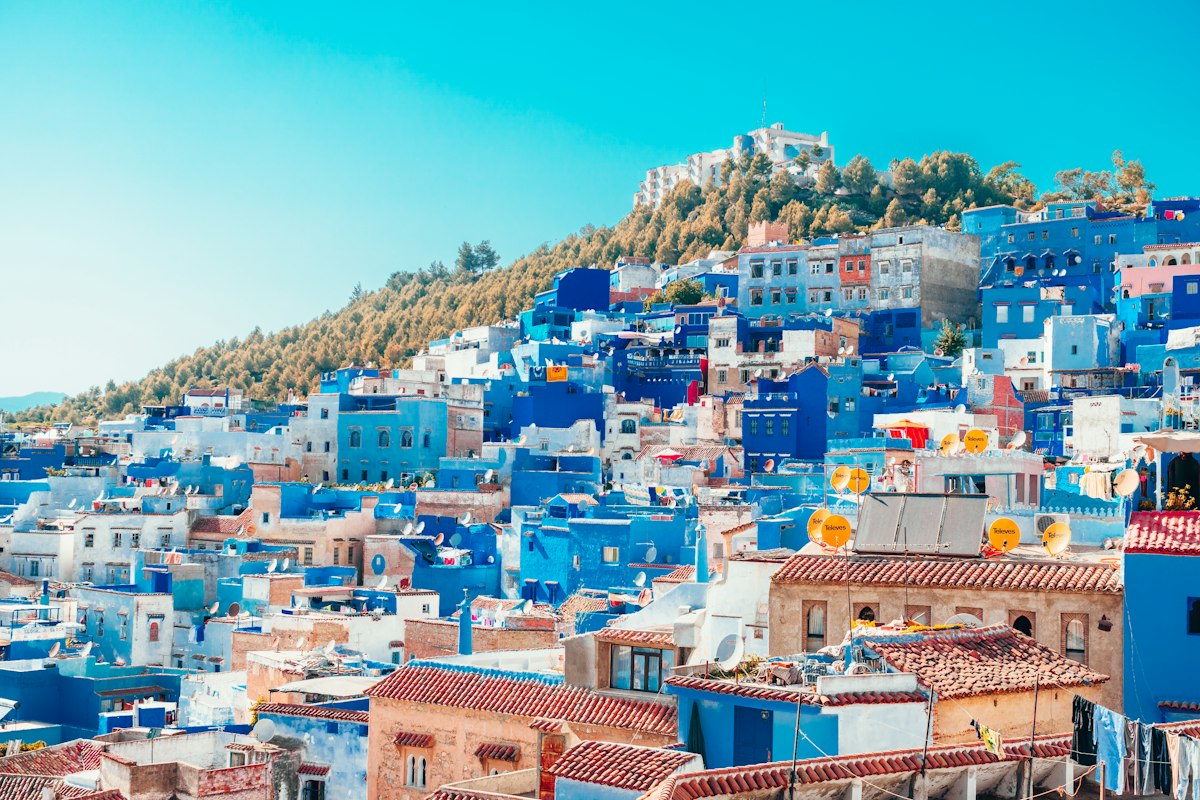
    Chefchaouen is a historic town in northern Morocco where almost every building is painted in shades of blue. Walking through the narrow streets, visitors find stone pathways and courtyard walls covered in cobalt or pale sky blue. The blue surfaces stretch across entire residential neighborhoods, creating an unmistakable appearance that draws visitors from around the world.

    Practical reasons behind the color

    Several explanations exist for why the town adopted its striking color scheme. Many residents explain that the blue wash helps keep their homes comfortable during hot summer months, when temperatures in the Rif Mountains rise quickly. Because light shades reflect strong sunlight, the painted stone walls keep interior rooms cool throughout the afternoon.

    Another common local belief connects the paint to insect control. Mosquitoes and flies tend to avoid bright blue walls because the surface resembles clear water or open sky, which offers them no place to land.

    The annual repainting tradition

    Maintaining the colorful exterior requires regular effort from the entire community. Each spring, families mix lime powder with water and blue pigment to refresh the outside of their homes. Neighbors often work together by sharing ladders and buckets, which allows them to repaint entire street corners in just a few days.

    They apply fresh coats of paint to doorway frames and the lower sections of walls where daily foot traffic causes the most wear. Because families have passed this custom down through generations, the town continues to preserve its distinct look.

    Navigating the car-free medina

    The historical center of Chefchaouen, known locally as the medina, was constructed long before modern transportation existed. Its layout consists of steep staircases and winding corridors that are far too narrow for cars or delivery vans. Residents and shopkeepers rely on small handcarts or pack animals to carry food supplies and building materials up the mountainside. Without the constant roar of traffic, pedestrians can walk freely through the neighborhood while listening to the sounds of daily conversation and running water.

    Daily life in the blue streets

    Behind the painted facades, the town follows a calm and steady daily rhythm. Natural mountain springs feed stone fountains scattered across different quarters, providing fresh drinking water where neighbors pause to talk. Local craftsmen work in small ground-floor shops, weaving heavy wool blankets on wooden looms or cutting leather for traditional shoes. In the late afternoon, older residents sit on stone benches outside their doors while children play tag along the steps. Small grocery shops sell fresh bread and mint tea to locals who stop by on their way home from work.

    Managing the arrival of visitors

    The unusual scenery has made Chefchaouen a popular destination for international travelers and photographers. While tourism brings welcome income to local restaurants and guesthouses, it also creates challenges for people who live there permanently. Crowds of visitors taking pictures outside private homes can sometimes disrupt the privacy of residents going about their normal routines. To address this issue, local guides encourage tourists to ask for permission before photographing individuals or residential doorways. Many travelers now choose to explore during the early morning hours, when the alleys remain empty and quiet.

  • The Island Where Cats Outnumber People

    The Island Where Cats Outnumber People

    Aoshima is a small island in southern Japan. It sits in the Inland Sea and is one mile long. Today, more than one hundred cats walk along the narrow paths. Only six elderly people live in the village. Because of this, many people call Aoshima Cat Island.

    Why the cats came

    Years ago, Aoshima was a busy fishing village. Nearly nine hundred people lived on the island in the 1940s. Fishermen kept wooden boats in the harbor. Mice lived inside the boats and damaged the fishing nets. The fishermen brought cats to catch the mice. The cats did their job well and protected the nets.

    Life on the island

    Over time, younger residents moved away to find work in big cities. Schools and shops closed down. As the human population shrank, the cat population grew. The cats had plenty of room and no natural enemies. They slept in open gardens and rested in sunny doorways.

    Daily care and feeding

    The remaining residents care for the animals every day. They put out dry food and clean water near the harbor. People from other parts of Japan also send boxes of cat food by mail. A local team visits to give medical care to the cats.

    Visitors from the mainland

    A small ferry travels to Aoshima twice a day from the mainland. The boat trip takes thirty minutes. Tourists take the ferry to see the animals. Visitors bring cameras and sit on the pier with friendly cats. The island has no hotels or shops. Visitors must bring their own food and carry their trash home.

    A quiet future

    Life on Aoshima remains slow and peaceful. The cats nap in the warm sun on stone steps. The elderly residents enjoy the company of the animals. Local animal groups visit regularly to keep the cats healthy.

  • The Shadowed Town That Built Giant Mirrors for Sunlight

    The Shadowed Town That Built Giant Mirrors for Sunlight

    Rjukan lies at the bottom of the narrow Vestfjord valley in southern Norway, flanked by sheer granite slopes and the towering bulk of Mount Gaustatoppen. Because the surrounding ridges rise sharply above the settlement, direct sunlight disappears from the streets in late September and fails to return until mid-March. For nearly six months each winter, the town remains submerged in cold mountain shadow.

    A century-old dilemma

    In the early twentieth century, industrialist Sam Eyde founded Rjukan to house workforce families for a vast nitrogen fertilizer plant powered by the nearby waterfall. Eyde noticed the persistent fatigue and low spirits that spread among workers during the sunless winter months. In 1913, he proposed placing large mirrors along the upper rim of the gorge to redirect sunlight down to the valley floor.

    The mechanical limitations of the period prevented engineers from building an automated tracking system, so the company funded an aerial tramway instead. Completed in 1928, the Krossobanen cable car carried residents out of the shaded valley, allowing families to spend their weekends absorbing direct daylight on the mountain plateau.

    Engineering an artificial dawn

    Almost a century after Eyde sketched his proposal, local artist Martin Andersen revived the project. Inspired by a smaller mirror installation in the Italian Alps, Andersen campaigned to realize the original vision. Supported by municipal funding and private sponsors, helicopters transported three computer-guided heliostats to the northern cliff face, roughly 450 meters above the municipal square.

    Powered by local solar panels and wind generators, the mirrors adjust their tilt every ten seconds to track the low arc of the winter sun as it skims the southern ridge. Computer sensors calculate the sun’s coordinates and coordinate the hydraulic motors, ensuring the reflected beam remains focused on the market square below.

    Life inside the reflected circle

    The three mirrors converge to cast an illuminated ellipse covering roughly six hundred square meters of the central plaza. On clear winter mornings, the square fills with amber brightness while surrounding streets remain dark and cold. Residents gather on wooden benches in sub-zero temperatures, donning sunglasses and sharing hot coffee as children play across the bright stones.

    Extended winter darkness often brings lethargy and seasonal mood shifts to northern communities. The artificial beam provides a shared gathering place during months that typically keep people indoors. In a town defined by steep terrain, the mountain mirrors have turned the coldest weeks of the year into a collective celebration of light.

  • The Return of the Dumbphone

    The Return of the Dumbphone

    Many people find themselves checking their mobile phones dozens of times an hour, often without realizing it. Because constant alerts and social media feeds can feel exhausting, an increasing number of young adults are choosing basic mobile phones from the early 2000s. These simple gadgets, widely known as dumbphones, can only make voice calls and send short text messages.

    A Device with Fewer Distractions

    Modern smartphones are designed to hold attention through bright displays and frequent notifications. Basic flip phones provide a different experience because they have small monochrome screens and batteries that last for several days. Without access to web browsers or video platforms, owners discover that they spend far less time looking at screens throughout the day.

    Changes in Daily Habits

    People who make the switch often notice immediate shifts in how they spend their free hours. During their daily commute, many choose to read printed books or observe their surroundings. Users also report that their sleep improves because they no longer keep a glowing screen beside their pillows at night. Conversations become more engaging when nobody at the table is distracted by incoming messages.

    Simple Technology Returns to Store Shelves

    Manufacturers have responded to this growing interest by updating older designs for modern cellular networks. Several technology brands that previously focused only on smartphones are now releasing basic handsets with durable plastic cases and reliable battery life. For people who want a break from internet notifications without losing contact with family, these affordable devices provide a welcome alternative.

    Living in a Connected World

    Carrying a basic phone still brings practical challenges in modern cities where many services rely on digital access. Everyday tasks, including transit tickets and online banking, frequently require specialized mobile applications. To handle these daily demands, some users choose a hybrid approach: they leave their smartphone at home during social events and carry only the basic phone in their pocket.

    The Search for Balance

    The growing popularity of basic handsets shows that many people want healthier boundaries with their technology. While smartphones remain useful tools for work and navigation, carrying a simple phone gives people an effective way to regain control over their daily attention.

  • The Village With No Roads

    The Village With No Roads

    Giethoorn is a small village in the Netherlands. The village center has no roads for cars. Water canals and stone paths run between the houses.

    Travel by water

    Canals connect every part of the village. People travel from place to place in small wooden boats. These boats have electric motors that make very little noise. Local people call them “whisper boats” because they move softly across the water.

    Boats are an important part of daily life. Children take boats to school in the morning. The mail carrier delivers letters and packages to front doors by boat. Even trash collectors travel on the water.

    History of the canals

    The waterways did not appear by accident. Hundreds of years ago, workers dug peat from the ground to use as fuel. These large holes filled with water and created long canals. Farmers built their homes on the dry ground between the waterways.

    Wooden bridges and footpaths

    People also travel on foot and by bicycle. Narrow paths follow the edge of the water. More than one hundred and seventy wooden bridges cross the canals. Each bridge leads to a private house or garden.

    Most houses have thatched roofs made of dry reeds. Lawns and flower gardens surround each building. Because water surrounds every house, each property looks like its own small island.

    Winter on the canals

    Daily life changes when cold weather arrives. During cold winters, the canals freeze into thick ice. People store their boats and put on ice skates.

    The frozen canals become winter roads. Children skate together to meet friends, and families skate across the village to buy fresh bread at the bakery.

  • Why Honey Never Spoils

    Why Honey Never Spoils

    Archaeologists working in Egyptian tombs have found pots of honey that are more than three thousand years old. When researchers examined the contents, they discovered that the honey was still edible. While fresh milk spoils in a few days and bread grows mold within a week, honey can sit on a shelf for years without rotting.

    A dry environment that stops bacteria

    Food rots when bacteria and fungi feed on nutrients and multiply. To grow, these microorganisms need water. Honey contains very little water, usually around 17 percent of its total weight, while natural sugars make up the rest.

    This high concentration of sugar creates a process called osmosis. Sugar molecules attract water strongly. When a bacterium lands on honey, the sugar pulls moisture out through the cell wall. The bacterium dries out and dies before it can reproduce or spoil the food.

    Natural acidity in the hive

    The chemical makeup of honey also keeps microbes away. Honey is naturally acidic, with a pH between 3 and 4.5. For comparison, lemon juice has a pH around 2, and black coffee is around 5.

    Gluconic acid gives honey most of its acidity. Worker bees produce this acid as they break down nectar from flowers. Most bacteria that cause food poisoning need a neutral environment around a pH of 7 to thrive. In honey, the acid stops their enzymes from working.

    How bees preserve their winter food

    Honeybees store honey as a food supply for the winter when flowers are gone. Because an entire colony depends on this reserve to survive freezing temperatures, the bees prepare it carefully.

    Field bees collect nectar in a separate honey stomach where an enzyme called glucose oxidase mixes into the liquid. Back at the hive, worker bees deposit the nectar into wax combs and beat their wings rapidly to evaporate moisture. During this drying process, glucose oxidase breaks down sugar into gluconic acid and hydrogen peroxide. Hydrogen peroxide acts as a mild disinfectant that destroys bacteria.

    Why honey turns cloudy

    Many people throw away a jar of honey when it becomes cloudy and hard to scoop. This change is called crystallization, and the honey remains safe to eat.

    Honey contains two main sugars, glucose and fructose. Glucose is less soluble in water than fructose, so over time, glucose molecules separate from the liquid and form small crystals. To return the honey to a smooth liquid, set the closed jar in a bowl of warm water for fifteen minutes. The gentle heat dissolves the crystals without damaging the flavor.

    Keeping honey fresh at home

    Honey has one natural weakness: it attracts moisture from surrounding air. In science, materials with this property are called hygroscopic.

    If an open jar sits in a humid kitchen, the surface absorbs water vapor from the air. When the water content near the top rises above 20 percent, wild yeasts can begin to ferment the sugars. Storing honey with the lid tightly closed and using a clean, dry spoon keeps moisture out, so the jar stays good indefinitely.

  • Why Walking in Nature Changes Your Brain: The Science of ‘Forest Bathing’

    Why Walking in Nature Changes Your Brain: The Science of ‘Forest Bathing’

    Have you ever noticed how peaceful you feel after spending an afternoon among green trees, listening to the gentle rustle of leaves? In Japan, this practice is known as shinrin-yoku, which translates directly to “forest bathing.” However, this isn’t about taking an actual bath in the woods; it simply means immersing yourself in the atmosphere of nature using all five senses.

    What Does Science Say?

    In recent years, neuroscientists and doctors around the world have studied what happens to the human body when we spend time in natural environments. The results are surprising:

    • Reduced Stress Hormones: Spending just 20 to 30 minutes in a forest or park significantly lowers levels of cortisol, the body’s primary stress hormone.
    • Sharper Focus: Natural landscapes allow the prefrontal cortex—the part of your brain responsible for problem-solving and decision-making—to rest and recharge.
    • Boosted Immune System: Trees release organic compounds called phytoncides, which protect plants from insects and fungi. When humans breathe them in, our bodies produce more natural killer cells that fight off infections.

    How to Practice It in Daily Life

    You don’t need to travel to a distant national park to experience the benefits of nature. Here are three simple ways to incorporate this into your routine:

    1. Leave your phone behind: Or switch it to airplane mode so your attention isn’t constantly interrupted by notifications.
    2. Slow down your pace: Forest bathing is not a high-intensity workout. Walk slowly and pause frequently to look around.
    3. Engage all your senses: Feel the rough bark of a tree trunk, smell the pine needles on the ground, and listen to the birds singing above.
  • Can a Tesla Really Fly? The Truth About the Flying Tesla Car

    Can a Tesla Really Fly? The Truth About the Flying Tesla Car

    For many years, people dreamed about flying cars. We saw them in science fiction movies and old comic books. Today, technology is moving very fast. Recently, many people on the internet started talking about a surprising topic: a flying Tesla car. But is this real, or is it just a dream?

    What is the Flying Tesla?

    The idea of a flying Tesla comes from Elon Musk, the head of Tesla. When discussing the upcoming Tesla Roadster, he made a shocking announcement: the car could include special rocket thrusters developed by his space company, SpaceX.

    According to Musk, small cold-gas thrusters could be placed around the vehicle. These thrusters could help the car accelerate instantly, stop faster, and even hover or float above the ground for brief moments. Because of these claims, fans and journalists quickly named it the “flying Tesla.”

    How Could It Work?

    Normal cars use tires and electric motors to drive on roads. But to leave the ground, a car needs extra thrust to fight gravity.

    • Cold-Gas Thrusters: Instead of burning rocket fuel, these thrusters shoot out very high-pressure air. This creates instant power without flames.
    • Lightweight Materials: Flying requires minimal weight. Engineers must use carbon fiber to keep the car light and strong.
    • Advanced Computer Control: Flying vehicles need smart software to stay balanced in the wind.

    The Big Challenges

    Although the idea sounds like something from a movie, building a flying car involves serious obstacles:

    1. Safety Rules: Driving on the street is regulated, but flying in the sky requires strict aviation permits and pilot training.
    2. Noise: High-pressure thrusters are very loud. Cities may not allow noisy thrusters in residential neighborhoods.
    3. Battery Energy: Lifting a two-ton electric vehicle uses a lot of energy, which could drain the battery very quickly.

    The Future of Sky Travel

    Tesla has delayed the Roadster several times to perfect its design, but Musk promises that the final version will be unlike any car ever made. At the same time, many aerospace companies are building electric flying taxis (eVTOLs) that may soon take passengers across busy cities.

    Conclusion

    While we might not see highways in the sky tomorrow, Tesla’s ambitious plans prove that the future of transportation is changing. The flying Tesla Roadster might just be the first step into a whole new world of mobility.

  • A Visitor from Deep Space: 3I/ATLAS

    A Visitor from Deep Space: 3I/ATLAS

    Is It Aliens?

    When scientists first found a new object in space called 3I/ATLAS, many people on the internet got very excited. They made videos and posts saying, “It’s aliens!” or “It’s a spaceship!”

    But scientists say it is not an alien ship. They have studied the object with special tools. These studies show that 3I/ATLAS is a completely natural object, like a comet or a big rock from space. It is not here to visit us; it is here to teach us about the galaxy.

    A Special Visitor

    3I/ATLAS looks like a comet, but it is very different from the comets in our Solar System. The big difference is its home. This object was not born near our Sun. It was born in the very cold, deep space between the stars. This makes it a very unique and important visitor for scientists to study.

    What Does the Name “3I/ATLAS” Mean?

    The name tells us two things:

    • ATLAS: This is the name of the telescope system in Hawaii that first saw the object.
    • 3I: The “I” stands for “interstellar,” which means “from another star system.” 3I/ATLAS is the third interstellar object (3rd “I”) that we have ever found.

    The “3I” name also shows that the discovery is very reliable. It was checked and confirmed three separate times by different scientists.

    Its Long Journey

    Scientists know 3I/ATLAS is just a visitor because of its path (its orbit). It is moving extremely fast—too fast for our Sun’s gravity to stop it. It will fly past Mars and then travel back out of our Solar System, returning to deep space forever.

    What Is It Made Of?

    The James Webb Space Telescope studied the object and found it is very different from our comets.

    1. Lots of CO₂: It has a very large amount of carbon dioxide (CO₂) gas. This tells scientists that it formed in an extremely cold place, much colder than where our comets formed.
    2. A Red Color: The object’s surface is reddish. This red color comes from special materials that were “cooked” by space radiation over a very long time. This proves it traveled between the stars for millions of years.

    Why Is This Object Important?

    3I/ATLAS is not just a rock. It is like a “message in a bottle” from a faraway star system. It is probably very, very old—maybe even older than our Sun.

    By studying it, scientists can learn how other star systems are made.