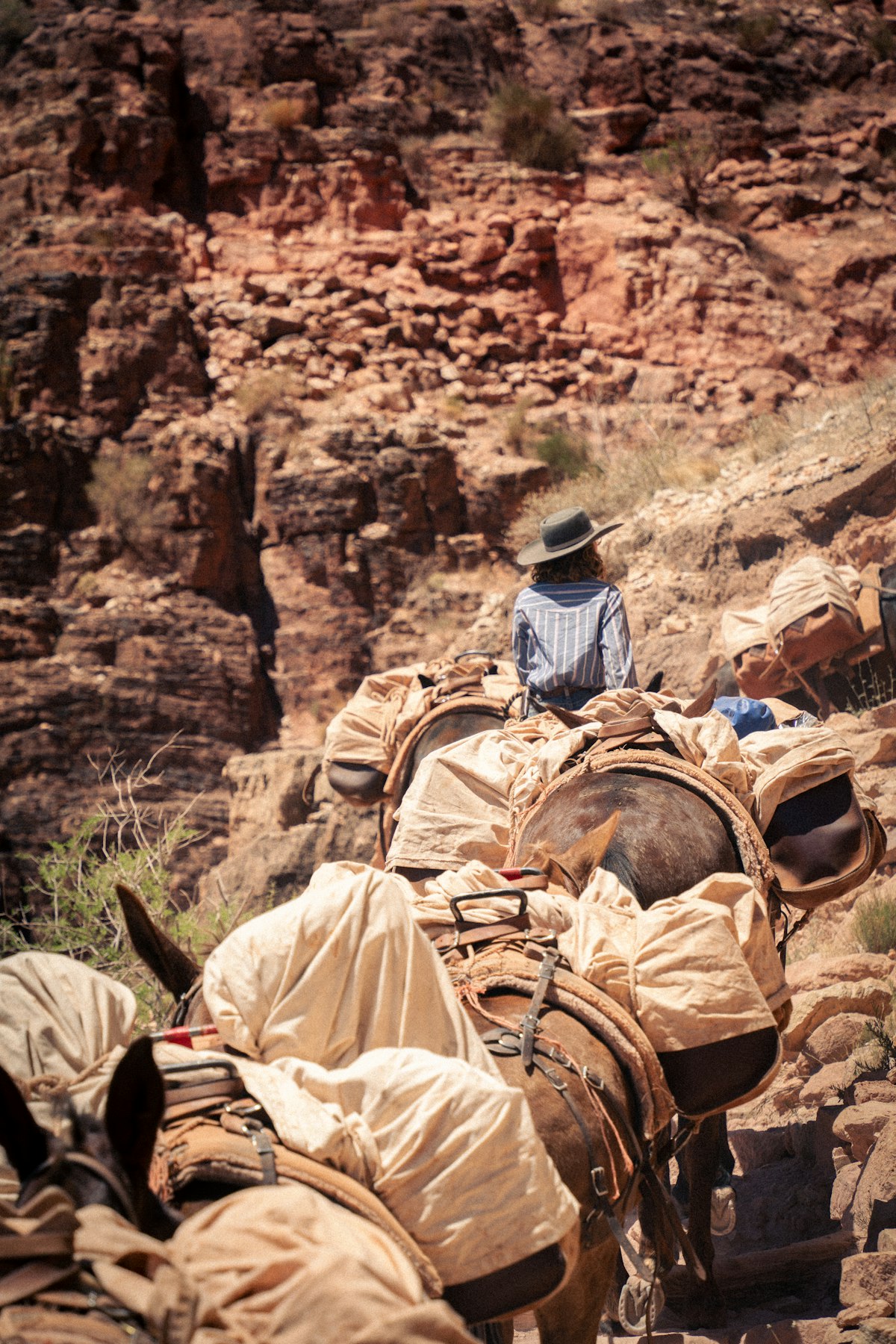
The United States Postal Service still delivers parcel freight on the backs of mules. Every weekday before sunrise, a contract wrangler meets a postal truck at Hualapai Hilltop, a desolate parking lot perched on the limestone rim of northern Arizona. Below the pavement, the terrain drops two thousand feet into Havasu Canyon, where roughly two hundred members of the Havasupai Tribe live in the village of Supai. Because sheer red sandstone walls cut the settlement off from the national highway grid, daily mail cannot arrive on wheels.
The work begins in the dark with handheld scales and canvas panniers. Each mule carries roughly one hundred and thirty to two hundred pounds of freight, distributed evenly across both flanks to protect the animal from spinal strain. The cargo looks much like the contents of any suburban mail van: cardboard boxes from online retailers, medicine bottles in padded envelopes, loaves of sliced bread, and cartons of eggs. Local packers strap the loads tight with thick cinch ropes, pulling each knot firm against the canvas. A lopsided pack will shift on the steep grade, so the wrangler circles each animal twice to inspect the balance before releasing the lead rope.
By six in the morning, the string of fifteen mules starts down the rocky trail. Iron shoes clatter against pale limestone switchbacks, sending loose pebbles tumbling over the ledge into the canyon abyss. The path narrows quickly, winding past sheer crimson cliffs that block the morning sun and keep the canyon floor in deep shadow. Down on the switchbacks, the only sounds are the rhythmic clink of halter chains and the heavy breathing of the animals on the descent. The pack train knows every turn in the stone pathway, stepping deliberately over polished boulders and dry wash beds where winter flash floods have scarred the gravel.
What happens on the canyon floor
Three hours and eight miles later, the red canyon walls widen into a grove of green cottonwood trees beside the pale turquoise current of Havasu Creek. Supai appears as a cluster of modest homes beneath the canyon cliffs, centered around a stone post office. When the clatter of hooves echoes against the rock face, residents gather outside the porch to collect their mail. The wrangler loosens the cinch straps and lowers the heavy panniers to the wooden dock. Inside the lobby, postal clerks sort the parcels onto low shelves.
Before the mules begin their five-hour return climb to the rim, the staff processes the day’s outgoing letters. Every postcard mailed from the counter receives a special purple ink mark showing a mule and its driver beneath the words “Mule Train Mail.” Once the ink dries and the envelopes slip into empty canvas sacks, the wrangler leads the string toward Havasu Creek. The animals drink from the cool water and rest in the shade before the afternoon heat strikes the cliffs above.
Leave a Reply