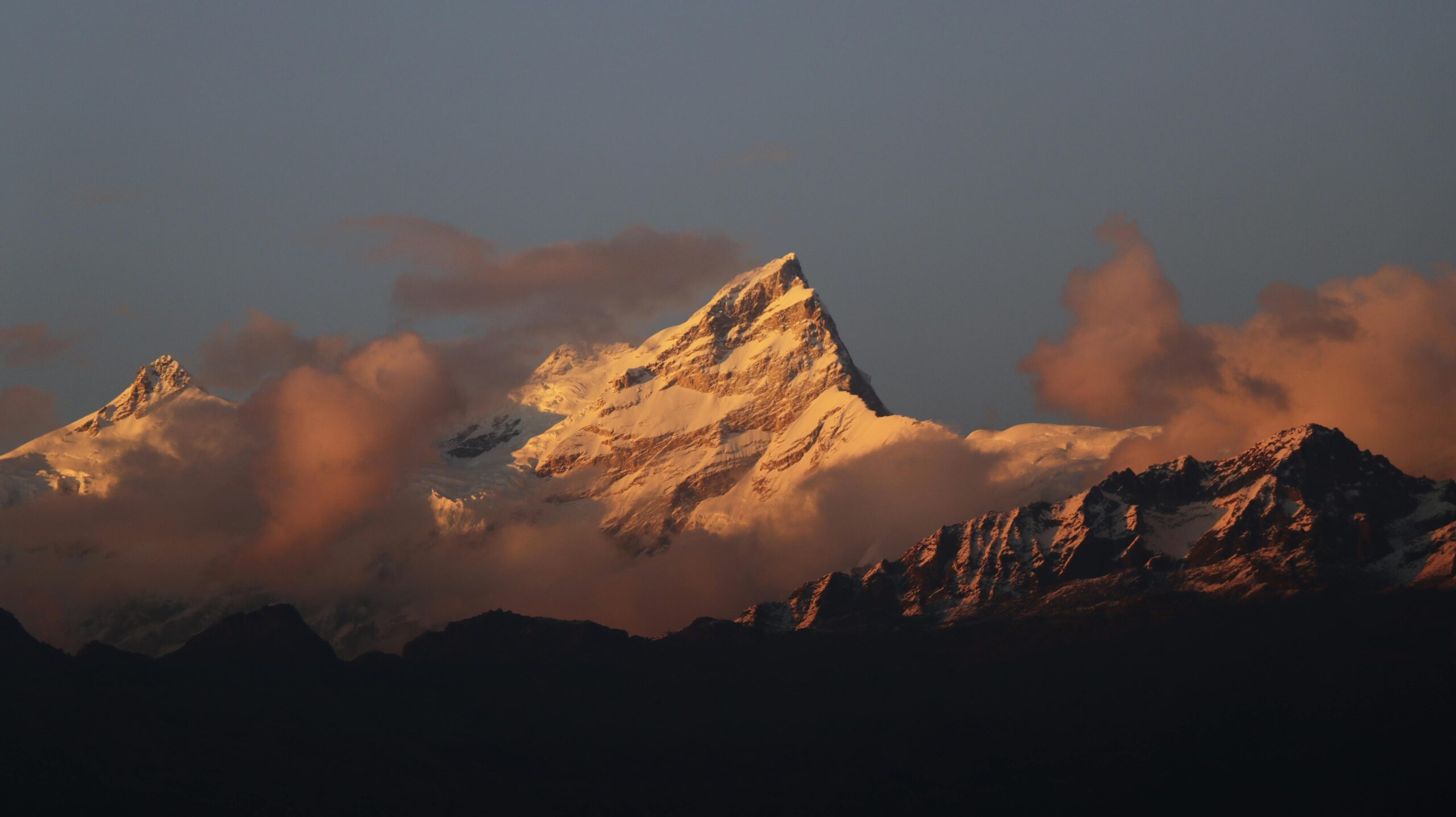
A new way to measure how “grand” or impressive a mountain looks is changing how we see the world’s tallest peaks. It turns out that Mount Everest may not be the most impressive mountain after all.
When Kai Xu was 19 years old, he visited Mount Tom in California. Standing at the bottom, he was amazed by its size and beauty. Xu had always loved mountains—he used to explore them on Google Earth as a child. But this time, seeing one in real life made him think: “Is there a way to measure how impressive a mountain looks?”
Xu, now a computer science student at New York University, decided to find an answer. He spent a year studying and programming before creating a new way to measure mountains. His method looks not only at how tall a mountain is, but also at how steep it rises from the ground. He called this new value “jut”, which describes how much a mountain seems to stick out from the earth.
When he calculated the “jut” of mountains around the world, Mount Everest ranked only 46th. The mountain that came first was Annapurna Fang in the Himalayas. Many mountain lovers found this surprising—but also exciting.
Xu’s idea started a lot of discussion among hikers and scientists. For many years, people measured mountains by their height above sea level. But Xu noticed that some tall mountains don’t look very dramatic, while smaller ones can look amazing. For example, Half Dome in Yosemite is not very high, but it rises sharply and looks breathtaking. On the other hand, Dome Argus in Antarctica is quite high but so flat that it hardly looks like a mountain at all.
To create his formula, Xu used data from Google Earth. He measured the height and steepness of more than 200,000 mountains to find their most impressive viewpoints. He later published his study online and created a website called peakjut.com, where people can search for mountains ranked by their jut score.
Many mountain fans loved the idea and started using his system to find new travel destinations. Some even changed their hiking plans after learning about high-jut peaks near them. Xu’s work also caught the attention of scientists at NASA, who said his method could even help describe mountains on other planets where there is no sea level.
Xu hopes his idea helps people appreciate mountains in a new way. “I want people to look at the world differently,” he says. His love for both computer science and geography continues to inspire him, and he believes technology can help us discover more hidden wonders on Earth—and maybe even beyond it.
Leave a Reply