Category: Intermediate

  • A Visitor from Deep Space: 3I/ATLAS

    A Visitor from Deep Space: 3I/ATLAS

    Is It Aliens?

    When scientists first found a new object in space called 3I/ATLAS, many people on the internet got very excited. They made videos and posts saying, “It’s aliens!” or “It’s a spaceship!”

    But scientists say it is not an alien ship. They have studied the object with special tools. These studies show that 3I/ATLAS is a completely natural object, like a comet or a big rock from space. It is not here to visit us; it is here to teach us about the galaxy.

    A Special Visitor

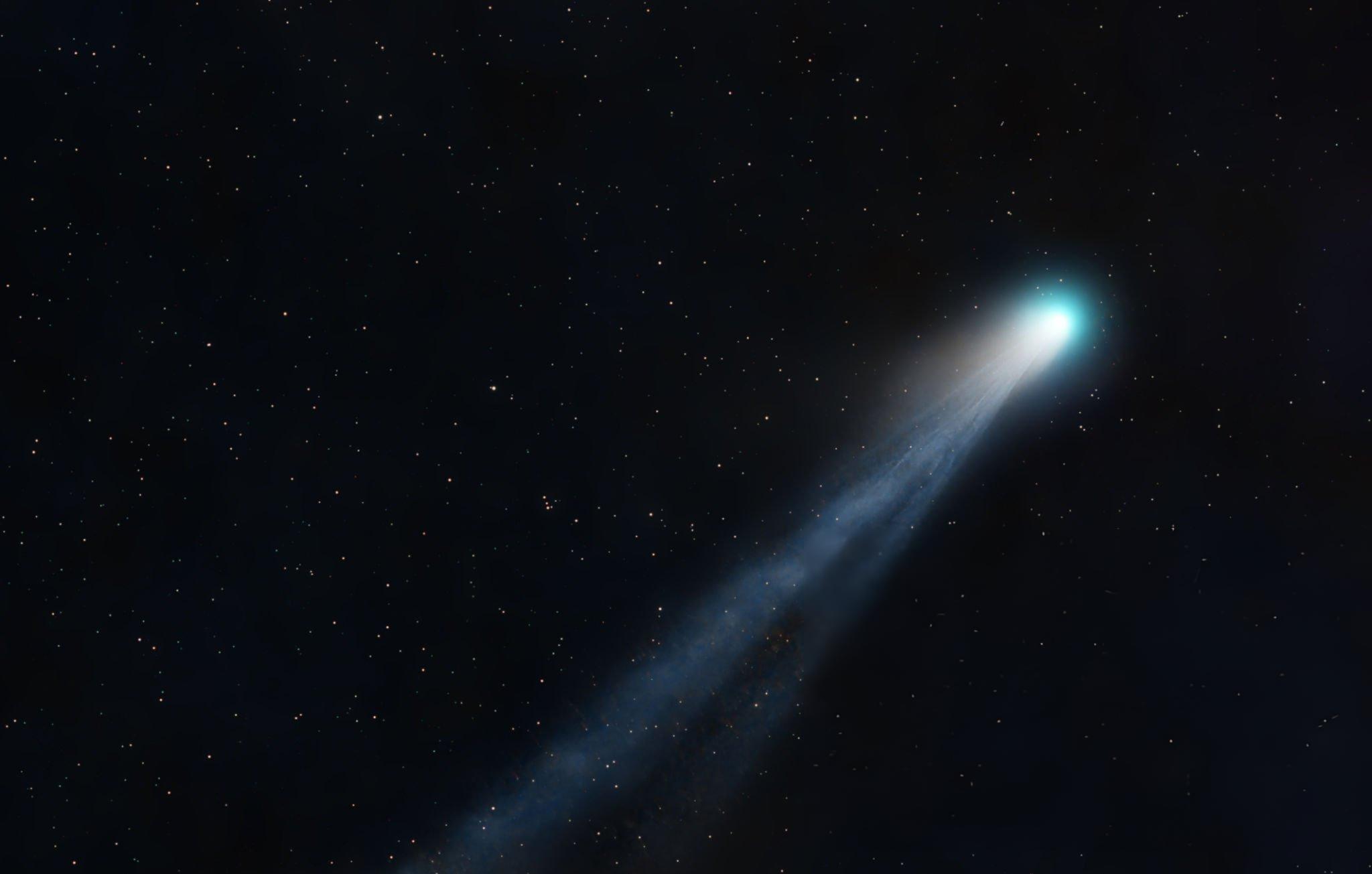
    3I/ATLAS looks like a comet, but it is very different from the comets in our Solar System. The big difference is its home. This object was not born near our Sun. It was born in the very cold, deep space between the stars. This makes it a very unique and important visitor for scientists to study.

    What Does the Name “3I/ATLAS” Mean?

    The name tells us two things:

    • ATLAS: This is the name of the telescope system in Hawaii that first saw the object.
    • 3I: The “I” stands for “interstellar,” which means “from another star system.” 3I/ATLAS is the third interstellar object (3rd “I”) that we have ever found.

    The “3I” name also shows that the discovery is very reliable. It was checked and confirmed three separate times by different scientists.

    Its Long Journey

    Scientists know 3I/ATLAS is just a visitor because of its path (its orbit). It is moving extremely fast—too fast for our Sun’s gravity to stop it. It will fly past Mars and then travel back out of our Solar System, returning to deep space forever.

    What Is It Made Of?

    The James Webb Space Telescope studied the object and found it is very different from our comets.

    1. Lots of CO₂: It has a very large amount of carbon dioxide (CO₂) gas. This tells scientists that it formed in an extremely cold place, much colder than where our comets formed.
    2. A Red Color: The object’s surface is reddish. This red color comes from special materials that were “cooked” by space radiation over a very long time. This proves it traveled between the stars for millions of years.

    Why Is This Object Important?

    3I/ATLAS is not just a rock. It is like a “message in a bottle” from a faraway star system. It is probably very, very old—maybe even older than our Sun.

    By studying it, scientists can learn how other star systems are made.
  • Which Animals Could Have Been on Noah’s Ark?

    Which Animals Could Have Been on Noah’s Ark?

    People have always wondered which animals were on Noah’s Ark. The story from the Book of Genesis tells about a big flood and a man named Noah who built a boat to save his family and many animals. But the Bible does not tell us exactly which animals were there. It only says that Noah sent a dove and a raven to see if the flood was over.

    Even though the Bible is not clear, artists and scientists have made many guesses about the animals on the ark. Their ideas show what people in different times believed about the world and about animals.

    Medieval pictures of Noah’s Ark

    People started thinking about the ark and its animals many centuries ago. One of the oldest pictures of the story was found on an ancient coin made in today’s Turkey. It shows Noah’s ark and two birds.

    In the Middle Ages, people loved stories about animals. Artists and writers wanted to show the ark and to teach religious lessons through it. They made beautiful books called bestiaries—books that included drawings and stories about real and imaginary animals.

    Because of these books, many old pictures show the ark full of different animals from land and sea.

    Familiar and exotic animals

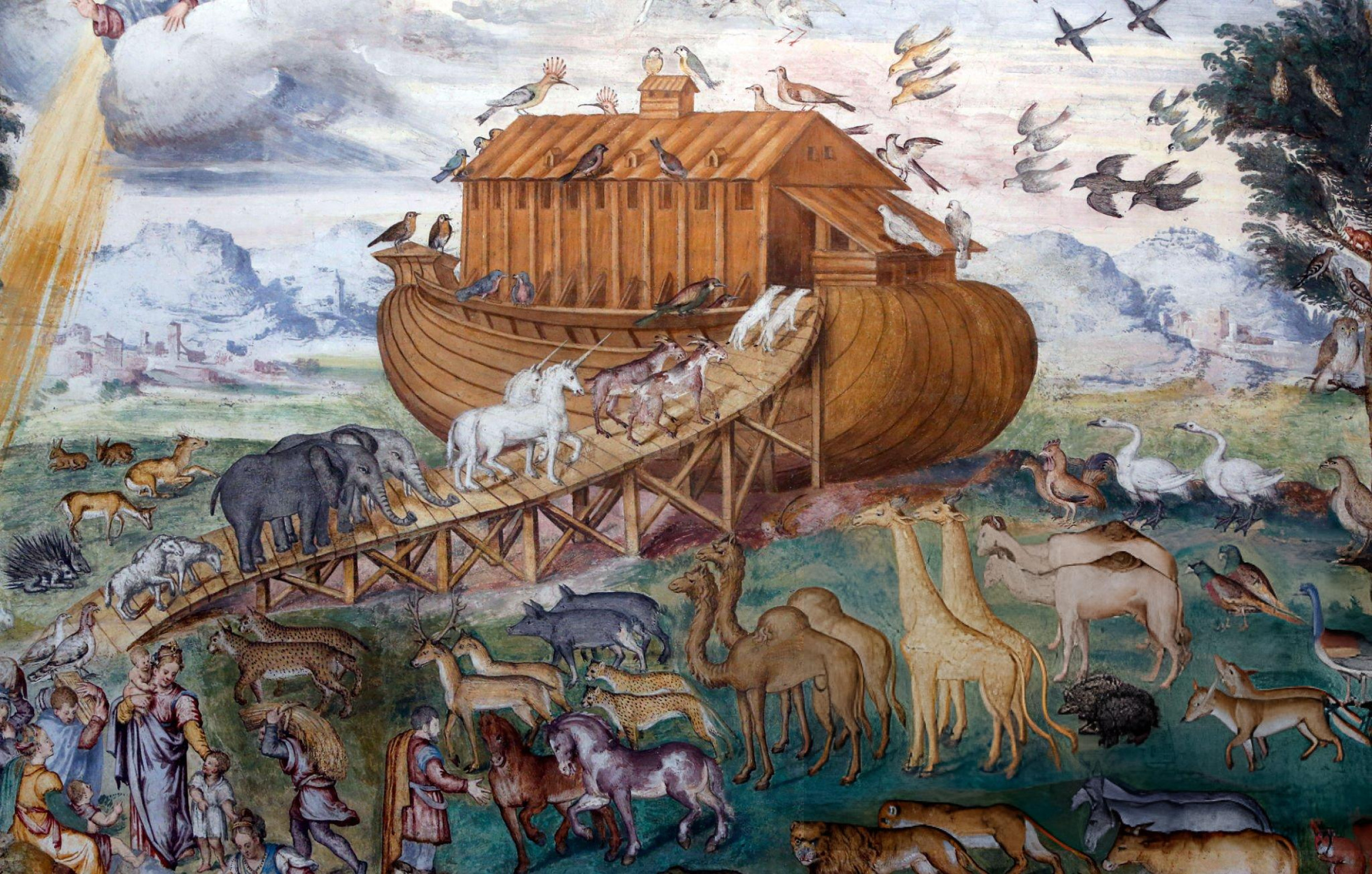
    Most European artists only knew the animals they saw every day, so they painted cows, goats, pigs, and birds leaving the ark in pairs.

    Later, when Europe began to trade with other countries, people learned about new and exotic animals. Artists started to paint monkeys, lions, peacocks, and giraffes on the ark.

    Some artists even added fantasy animals like unicorns or dragons because people did not know much about the world. Without books or travel, they imagined strange creatures as real.

    Early scientific ideas

    In the 1500s and 1600s, after the Reformation, some scientists began to think about the ark as a real event. They tried to understand how all the animals could fit on one ship.

    A French mathematician named Jean Borrell said there were only 93 kinds of mammals on the ark, and that other animals appeared later from the mud.

    A Spanish priest, Benito Pereira, thought insects didn’t need to be on the ark because they could come from dead bodies.

    And the English explorer Sir Walter Raleigh said that hybrid animals, like mules, didn’t exist yet and so were not on the ark.

    The idea of species

    A German scientist named Athanasius Kircher wrote a book in 1675 called Arca Noë about the ark. He believed that many animals were hybrids—for example, he said giraffes were half camel and half leopard (which is not true).

    Because of these strange ideas, he said Noah only needed to take 130 types of mammals, 30 snakes, and 150 birds to fill the world after the flood.

    Even though his ideas were wrong, Kircher and other thinkers helped people start to understand what we now call species—groups of animals that share the same kind.

    A story that inspired science and art

    The story of Noah’s Ark inspired people for hundreds of years.

    From religious art in the Middle Ages to scientific studies in the 1600s, it made people ask big questions about animals and nature.

    Even if we don’t know exactly which animals were on the ark, the story helped humans learn more about the natural world and how we classify living things today.

  • Have We Been Measuring Mountains the Wrong Way?

    Have We Been Measuring Mountains the Wrong Way?

    A new way to measure how “grand” or impressive a mountain looks is changing how we see the world’s tallest peaks. It turns out that Mount Everest may not be the most impressive mountain after all.

    When Kai Xu was 19 years old, he visited Mount Tom in California. Standing at the bottom, he was amazed by its size and beauty. Xu had always loved mountains—he used to explore them on Google Earth as a child. But this time, seeing one in real life made him think: “Is there a way to measure how impressive a mountain looks?”

    Xu, now a computer science student at New York University, decided to find an answer. He spent a year studying and programming before creating a new way to measure mountains. His method looks not only at how tall a mountain is, but also at how steep it rises from the ground. He called this new value “jut”, which describes how much a mountain seems to stick out from the earth.

    When he calculated the “jut” of mountains around the world, Mount Everest ranked only 46th. The mountain that came first was Annapurna Fang in the Himalayas. Many mountain lovers found this surprising—but also exciting.

    Xu’s idea started a lot of discussion among hikers and scientists. For many years, people measured mountains by their height above sea level. But Xu noticed that some tall mountains don’t look very dramatic, while smaller ones can look amazing. For example, Half Dome in Yosemite is not very high, but it rises sharply and looks breathtaking. On the other hand, Dome Argus in Antarctica is quite high but so flat that it hardly looks like a mountain at all.

    To create his formula, Xu used data from Google Earth. He measured the height and steepness of more than 200,000 mountains to find their most impressive viewpoints. He later published his study online and created a website called peakjut.com, where people can search for mountains ranked by their jut score.

    Many mountain fans loved the idea and started using his system to find new travel destinations. Some even changed their hiking plans after learning about high-jut peaks near them. Xu’s work also caught the attention of scientists at NASA, who said his method could even help describe mountains on other planets where there is no sea level.

    Xu hopes his idea helps people appreciate mountains in a new way. “I want people to look at the world differently,” he says. His love for both computer science and geography continues to inspire him, and he believes technology can help us discover more hidden wonders on Earth—and maybe even beyond it.

  • The Secret Behind a Woman Who Lived 117 Years

    The Secret Behind a Woman Who Lived 117 Years

    Maria Branyas Morera was the world’s oldest person when she died last year at the age of 117. Scientists studied her genes to understand why she lived such a long life.

    Before she died, Maria gave doctors samples of her blood, saliva, urine, and stool. Doctors wanted to learn about her body and health to see what made her life so long. Researchers compared her with other women from Spain and Portugal, because Maria was born in the United States to Spanish parents but lived most of her life in Spain.

    The study showed that her long life was a mix of good habits and lucky genes. Maria did not smoke or drink alcohol, she exercised often, and she spent time with other people. She also had special genes that helped protect her from diseases like heart problems, diabetes, and dementia. Her cells looked younger than her real age.

    Scientists also looked at her gut microbiome, which is the bacteria inside the stomach and intestines. Maria had a lot of good bacteria called Bifidobacterium. This may have been helped by the yogurt she ate three times every day. These bacteria can protect the body from inflammation and help people stay healthy.

    However, scientists warn that eating yogurt alone will not make someone live to 117. Some experts say the study of one person is not enough to explain why she lived so long. Maybe she was just very lucky. Other scientists add that things like money, health care, and lifestyle also play a big role in how long someone lives.

    The main researcher, Manel Esteller, hopes that the results will help create new medicines to keep older people healthier. He says, “Maria’s parents gave her very good genes, but we cannot choose our parents.”

  • How to Build Good Habits and Keep Them in the New Year

    How to Build Good Habits and Keep Them in the New Year

    Good habits are very important if you want to be successful in life. They help you in school, in your job, and in your personal health. But creating new habits and keeping them can be difficult. Almost half of New Year’s resolutions fail because many people don’t know how habits really work. By understanding the science of habits, you can learn how to build routines that last.

    A habit is something you do again and again until it becomes automatic. Simple habits include brushing your teeth or making your bed. More complex ones can be planning your day or studying at the same time every evening. When you repeat an action, your brain creates new connections. Scientists call this neuroplasticity. You can let it happen passively by repeating behaviors, or you can do it actively by choosing habits on purpose. For example, a student may notice better focus when studying every day at the same hour. By reflecting on this, the student can train the brain to build a useful habit.

    Scientists also explain habits with something called the habit loop. It has four parts: cue, craving, response, and reward. A cue is the signal that starts the habit, like your alarm in the morning. A craving is the desire, such as wanting to feel more awake. The response is the action, for example making coffee. The reward is the good feeling you get, like having more energy. The loop works for both good and bad habits. When stressed, someone might want comfort, check social media, and feel relaxed for a short time. That becomes a bad loop. But if you replace the response with something better, like taking a walk or doing a short meditation, you can build a positive loop instead.

    To make new habits strong, you need more than willpower. Start by finding the cue. Ask yourself what makes you do the habit—maybe stress or a certain time of day. Then replace the response with a healthier action. Make sure the reward feels good, such as feeling calmer after a walk. Begin with small steps, like spending just 10 minutes reviewing your goals each morning. Change one habit at a time. Make it easier by preparing your environment. For example, keep healthy snacks ready or remove distractions from your study space. You can also share your goals with a friend and celebrate your progress with small rewards.

    The most important part is consistency. Research shows it may take weeks or even months for a habit to become automatic. You must keep practicing even if it feels slow. Don’t think of mistakes as failures. Instead, see them as lessons. If you miss your morning routine one day, ask why it happened and plan to do better next time, maybe by waking up earlier. Over time, your brain will rewire itself, and the new habit will become natural. Eventually, it will be part of your daily life, helping you stay healthy, happy, and successful.

  • Extreme Heat May Make People Age Faster

    Extreme Heat May Make People Age Faster

    We know that very hot weather can feel uncomfortable, exhausting, and even dangerous. But new research shows that extreme heat may also speed up the aging process. Scientists say that spending too much time in high temperatures could increase the risk of diseases and other health problems linked to aging.

    Researchers at the University of Southern California studied how heat affects aging. They used a method called epigenetic clocks, which measures chemical changes in DNA that are connected to aging. The team looked at blood samples from 3,600 older adults across the United States.

    The results showed that for every 200 days of temperatures above 32.2°C over six years, people’s biological age increased by up to 3.5 months. This means that people living in very hot areas may age faster at the cellular level compared to those in cooler places.

    Our bodies react to heat in different ways. Heat can cause dehydration, inflammation, and stress on cells. All of these can damage DNA and speed up epigenetic aging, which controls how our genes work as we get older.

    The study suggests that extreme heat may change how DNA functions, making the body biologically older than its real age. However, not everyone is affected in the same way. Factors such as air conditioning, outdoor activities, and lifestyle choices may change the risk.

    The researchers considered other factors like age, race, income, smoking, drinking, and obesity. But they did not study personal habits like how often people use cooling methods. The research focused on older adults, but scientists think younger people could also be affected. More studies are needed to understand how heat might influence all age groups.

  • NASA Rover Finds Possible Evidence of Life on Mars

    NASA Rover Finds Possible Evidence of Life on Mars

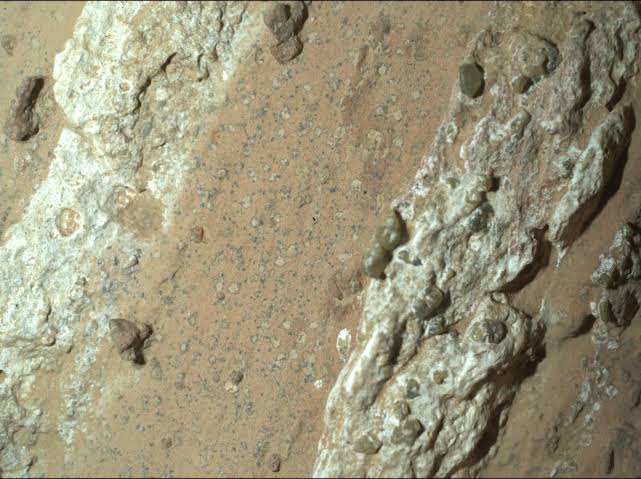
    Scientists have found unusual rocks on Mars that may show signs of past life. The rocks, discovered by NASA’s Perseverance Rover, are covered with small spots called “leopard spots” and “poppy seeds.” They are a type of mudstone, about 3.5 billion years old, found in an ancient riverbed.

    Experts think the spots contain minerals that could have been made by tiny living things (microbes) long ago. Another possibility is that the minerals were created by natural geological processes. Still, NASA says these rocks may be the strongest evidence of life ever found on Mars.

    “This is very exciting,” said Professor Sanjeev Gupta from Imperial College London. “If we saw these features on Earth, we might say they were made by microbes. We cannot say for sure that this is life, but it gives us something important to study.”

    NASA scientist Dr. Nicola Fox added: “It’s like finding a fossil. Maybe it’s something microbes left behind.”

    To know for sure, the rocks need to be brought back to Earth. Perseverance has already collected samples and stored them in containers. NASA and the European Space Agency (ESA) planned a mission to return them, but budget cuts in the U.S. may cancel the project. China is also planning a Mars sample return mission, possibly in 2028.

    Mars today is a cold, dry desert. But billions of years ago, it had a thicker atmosphere and water. That’s why the Jezero Crater, where Perseverance landed in 2021, is a good place to search for past life. The rover has spent four years exploring this area, which was once a lake with a river.

    The rover studied the rocks with its onboard instruments and sent the data to Earth. Scientists think the minerals formed when mud at the bottom of the lake reacted with organic matter. On Earth, such reactions are usually connected to microbes.

    However, some scientists say the reactions could also happen without life, but this would require very high temperatures. The rocks, though, do not show signs of heating.

    “This could be the best evidence for life on Mars we have so far,” said Dr. Joel Hurowitz, one of the study’s authors. “But to be confident, we need to study the samples here on Earth.”

  • 102-Year-Old Man Becomes the Oldest Person to Climb Mount Fuji

    102-Year-Old Man Becomes the Oldest Person to Climb Mount Fuji

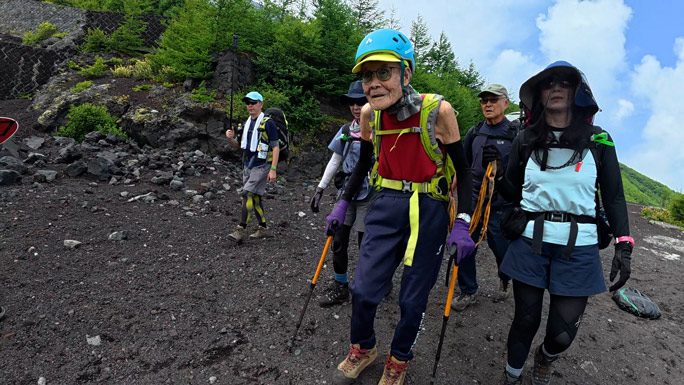
    A Japanese man, Kokichi Akuzawa, has become the oldest person to climb Mount Fuji at the age of 102. With help from his daughter and friends, he reached the top of Japan’s tallest mountain, which is 3,776 meters high.

    Akuzawa is an experienced climber. He is the honorary chairman of the Gunma Mountaineering Club and has climbed mountains almost every week. For his 99th birthday in 2022, he climbed Mount Nabewariyama, a smaller peak near Tokyo. He had already climbed Mount Fuji once before at age 96. Since then, he has faced serious health problems, such as a fall, heart failure, and shingles. Still, he wanted to climb Mount Fuji one last time.

    On August 3, Akuzawa started climbing the Yoshida trail, the easiest and most popular of Fuji’s four routes. Normally, this trail takes about six hours, but Akuzawa took three days, resting in huts along the way. “It was tough, and it felt very different from the last time I climbed,” he said. “I’m amazed I made it to the top.”

    Before the climb, Akuzawa trained by walking one hour every morning and climbing other mountains. The weather was good, but near the summit it became very cold with less oxygen. On the third day, he wanted to stop, but his daughter Motoe, who is 70, encouraged him to continue step by step. Finally, on August 5 at 11 a.m., Akuzawa reached the summit.

    “I couldn’t have done it without everyone’s help. I’m happy now,” he said.

    Mount Fuji, located southwest of Tokyo, is a sacred symbol of Japan and has appeared in many famous artworks, including Hokusai’s Thirty-Six Views of Mount Fuji. Over the years, several people have held the record as the oldest climber of Fuji. In 1986, Teiichi Igarashi summited at age 99. In 1994, Ichijiro Araya reached the top at 100 years and 258 days. Now, Akuzawa holds the record at 102 years and 51 days.

    Guinness World Records gave him an official certificate. When asked if he would climb again, Akuzawa replied, “For now, I am satisfied. If you ask me next year, maybe I’ll give you a different answer.”