Is It Aliens?
When scientists first found a new object in space called 3I/ATLAS, many people on the internet got very excited. They made videos and posts saying, “It’s aliens!” or “It’s a spaceship!”
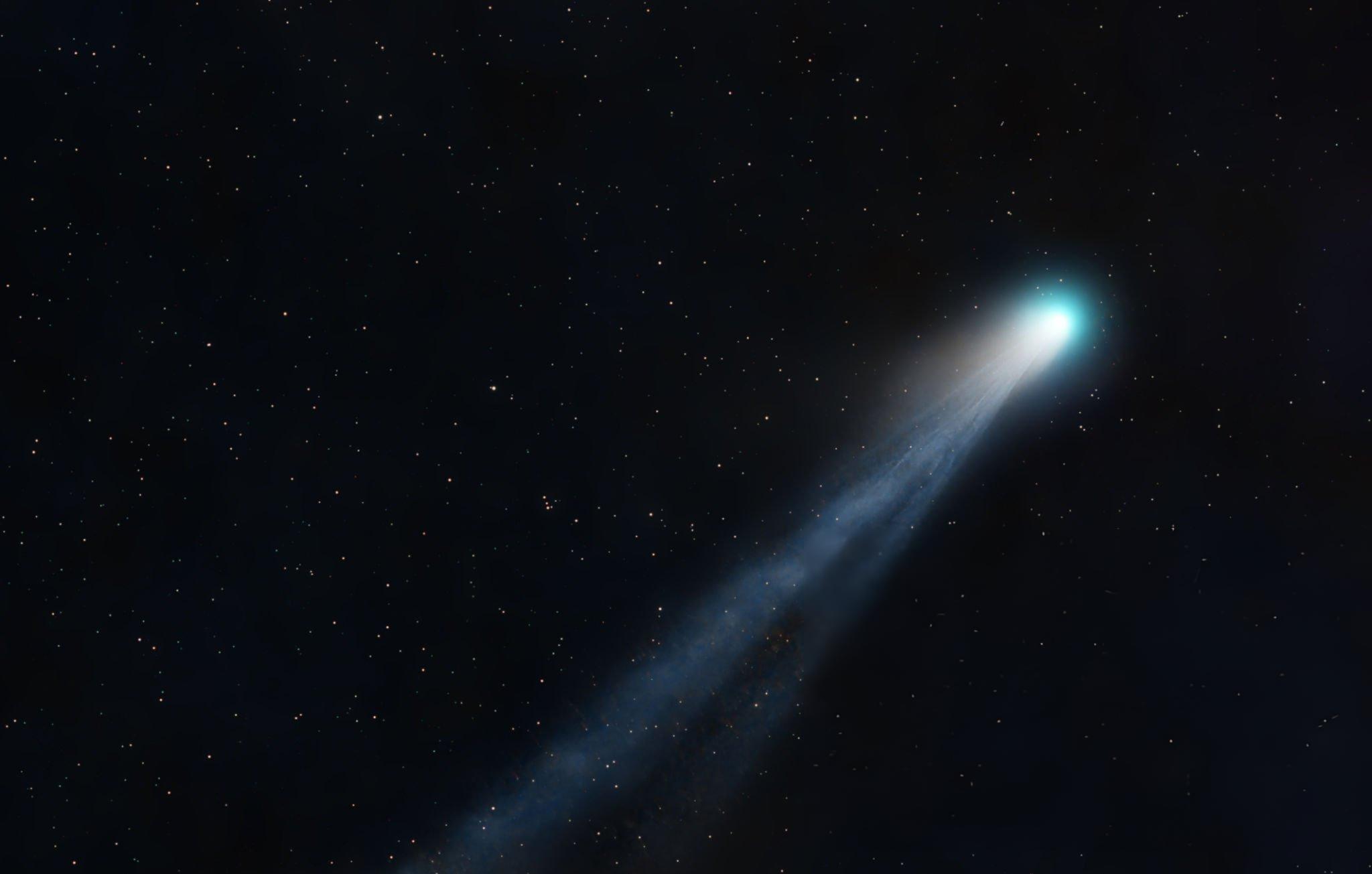
But scientists say it is not an alien ship. They have studied the object with special tools. These studies show that 3I/ATLAS is a completely natural object, like a comet or a big rock from space. It is not here to visit us; it is here to teach us about the galaxy.
A Special Visitor
3I/ATLAS looks like a comet, but it is very different from the comets in our Solar System. The big difference is its home. This object was not born near our Sun. It was born in the very cold, deep space between the stars. This makes it a very unique and important visitor for scientists to study.
What Does the Name “3I/ATLAS” Mean?
The name tells us two things:
• ATLAS: This is the name of the telescope system in Hawaii that first saw the object.
• 3I: The “I” stands for “interstellar,” which means “from another star system.” 3I/ATLAS is the third interstellar object (3rd “I”) that we have ever found.
The “3I” name also shows that the discovery is very reliable. It was checked and confirmed three separate times by different scientists.
Its Long Journey
Scientists know 3I/ATLAS is just a visitor because of its path (its orbit). It is moving extremely fast—too fast for our Sun’s gravity to stop it. It will fly past Mars and then travel back out of our Solar System, returning to deep space forever.
What Is It Made Of?
The James Webb Space Telescope studied the object and found it is very different from our comets.
1. Lots of CO₂: It has a very large amount of carbon dioxide (CO₂) gas. This tells scientists that it formed in an extremely cold place, much colder than where our comets formed.
2. A Red Color: The object’s surface is reddish. This red color comes from special materials that were “cooked” by space radiation over a very long time. This proves it traveled between the stars for millions of years.
Why Is This Object Important?
3I/ATLAS is not just a rock. It is like a “message in a bottle” from a faraway star system. It is probably very, very old—maybe even older than our Sun.
By studying it, scientists can learn how other star systems are made.